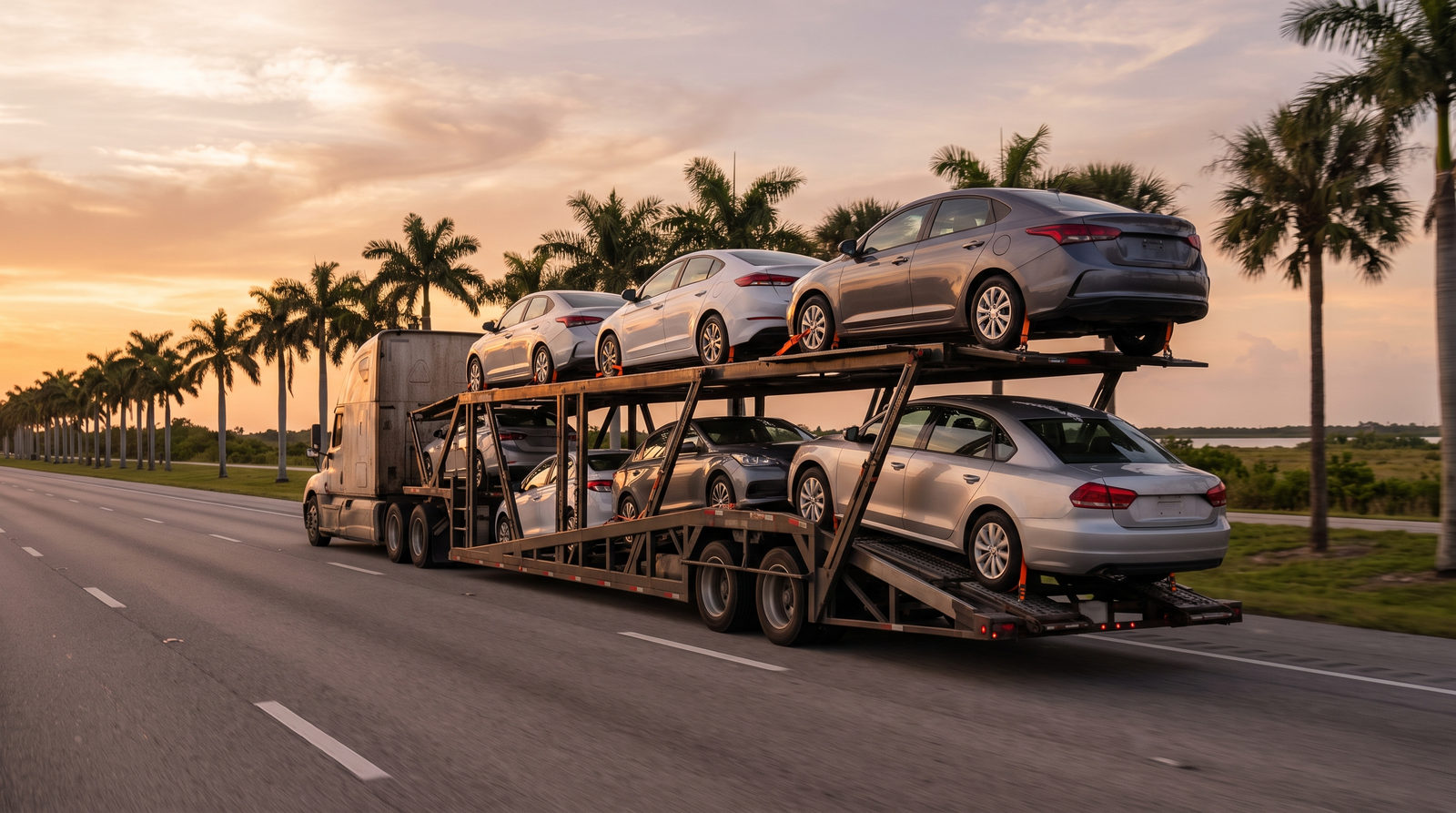
Three interstates cross North Carolina: I-85 through the Piedmont, I-95 along the coastal plain, and I-40 running from the mountains to the sea. Carriers work these lanes in both directions every day, so your vehicle usually joins a truck already scheduled to pass through. Share your pickup and delivery points and we match you with a licensed, insured carrier covering that route.





5-Star Average Rating
Fully Insured
Top Rated Service
Nationwide Coverage
Door to Door Delivery
North Carolina is one of the easier states in the country to ship a car into or out of. The state sits on freight corridors that carriers already run, which keeps pickup windows short and gives you more than one truck to choose from on most routes.
Tell us where the vehicle starts and where it needs to go. We match it with a carrier already covering that lane, and the driver inspects the car and loads it at pickup. You get updates while it travels, so you know where it is without chasing anyone.
Every shipment moves with a licensed, insured carrier matched to your route. If the schedule shifts, you hear it from us rather than finding out at the door.

Cost and timing depend on your route, trailer type, vehicle size, and the time of year. The ranges below reflect typical market pricing and transit windows by distance, not a commitment on either. Your actual quote is based on real carrier availability on your specific route at the time of booking.
North Carolina prices well because carriers are already here. I-85 runs Charlotte through the Piedmont Triad and on toward Atlanta and Richmond, I-95 carries north to south traffic across the coastal plain, and I-40 crosses the state from Asheville to Wilmington. Three corridors that busy mean a carrier collecting your vehicle is usually topping up a load rather than building a route from nothing, and that is why the state sits at the cheaper end of the national range rather than the middle.
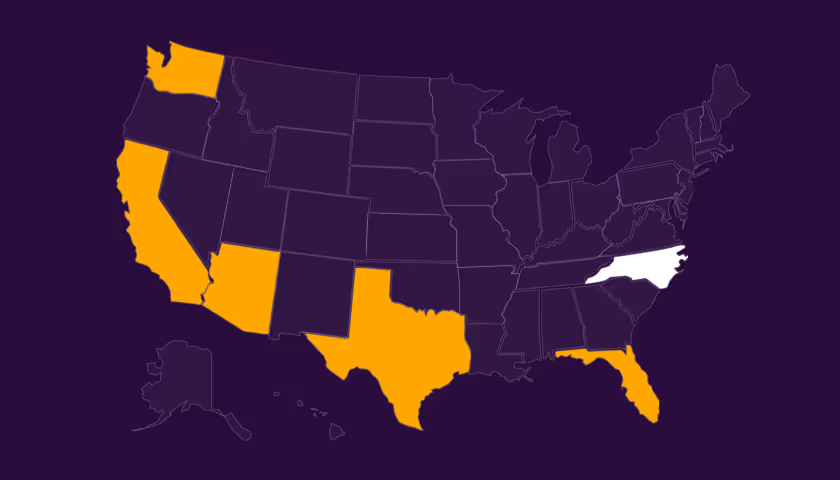
Direction matters, because North Carolina does not trade evenly with the rest of the country. Vehicles leaving the state head mostly to Ohio, Georgia and Florida, while vehicles arriving come mostly from California, Virginia and Pennsylvania. A lane that is busy one way can be thin the other, so the same two cities can price differently depending on which end you are starting from. Where you are in the state counts too. Charlotte and the Raleigh-Durham area sit on the corridors and price near the low end, while Asheville in the mountains and the Outer Banks on the coast take longer to reach and are worth booking with more notice.
Vehicle size, whether the car runs, and trailer type all move the number, and enclosed transport runs roughly forty-five percent above open because fewer vehicles fit on the trailer. The factor most within your control is lead time. Booking a week or two ahead puts your vehicle on a truck already running I-85, I-95 or I-40 rather than one routed out to collect it, and that gap widens for addresses well off those corridors.
Get your North Carolina quoteThe entire process is arranged in clear steps so you always know what’s happening and what comes next.





Tell us where the vehicle starts and where it needs to go. We review the route, calculate the pricing, and send you a clear estimate with everything included from the start.

Pick a window that fits your schedule. We assign a carrier already heading in the right direction and walk you through what happens at each stage, so you know what to expect before the truck arrives.

Remove personal items, make sure the keys are accessible, and park the car where the driver can reach it easily. When the carrier arrives, the driver checks the vehicle’s condition and loads it securely.

Your vehicle is secured to the carrier for the route it is travelling. Open or enclosed, the shipment is insured, and you receive updates showing where the vehicle is and how the schedule is holding.

At drop-off, the driver goes over the car with you to confirm everything matches the inspection recorded at pickup. Once you have both agreed the condition is unchanged, the shipment is complete.

Most North Carolina moves fall into one of a few shapes. Here is what we arrange, and which option tends to suit which situation. If you are not sure which applies, the shipping calculator will price the route either way.
Carriers concentrate on I-85, I-95 and I-40 because that is where the volume is, which leaves the rest of the state needing a bit more planning. For Asheville and the mountain counties, for the Outer Banks and the coastal towns, and for the farming counties east of I-95, we widen the pickup window and work with carriers who already run those spurs rather than forcing a truck off its route. Tell us the address rather than the nearest city and we will plan around what it actually takes to get there.
Open transport suits standard sedans, SUVs and daily drivers, and it is what the large majority of vehicles move on. Your car rides on an open trailer alongside others, insured for the trip, on the same kind of carrier that delivers new cars to dealerships. On North Carolina routes it is also the option with the most trucks available, which usually means a shorter wait for pickup.
Enclosed transport puts your vehicle inside a covered trailer, out of the weather and away from road debris. It suits classics, low-clearance builds, high-value cars and anything you would rather not expose to a coastal storm or a summer on I-95. Fewer vehicles fit per trailer, so it costs more and takes a little longer to schedule.
Seasonal moves run in and out of North Carolina on a predictable rhythm, with Florida the destination people ask about most on the way south. Booking early on these lanes matters more than it does the rest of the year, because everyone is moving in the same direction at the same time and the trucks fill up first.
Door to door means the carrier collects and delivers at the addresses you give us, whether that is a house, an office, a dealership or a storage yard.
Where a street cannot take a full-size transporter, and plenty cannot, the driver arranges a nearby meeting point with you in advance rather than on the day.
Every shipper claims to be reliable. Here is what actually separates a well-run move from a risky one, and what to ask before you book anyone for a North Carolina route.
Ask whether the company can name a real North Carolina constraint before you raise it, such as how they reach an address in the mountains west of Asheville, or whether the emissions requirement in your destination county is one of the nineteen still in force.
Ask whether the price you are quoted is based on your actual route and vehicle, or a generic distance estimate that gets revised once a carrier is assigned.
Ask what happens if no carrier is available on your exact date. That matters most between June and November, when storm activity on the coast can push carriers off I-95 and the eastern routes for days at a time. A shipper working from an existing carrier network can usually offer options faster than one starting from scratch.
Get your North Carolina quoteDemand into and out of North Carolina comes from a few clear directions. Here is who ships most often.
.svg)
A good share of the demand we see into North Carolina comes from buyers who purchased a vehicle sight unseen from somewhere else in the country. We arrange pickup from the seller or the dealership and deliver it to your North Carolina address, so nobody has to fly out and drive it back. One thing is worth knowing before you buy. North Carolina charges a three percent Highway Use Tax when the vehicle is titled, rather than sales tax. It is charged once, at titling, on the retail value less any trade-in allowance, and NCDMV collects it at the same counter that issues the title. County vehicle property tax is separate and arrives later with your registration renewal.
Estimate your shipment →.svg)
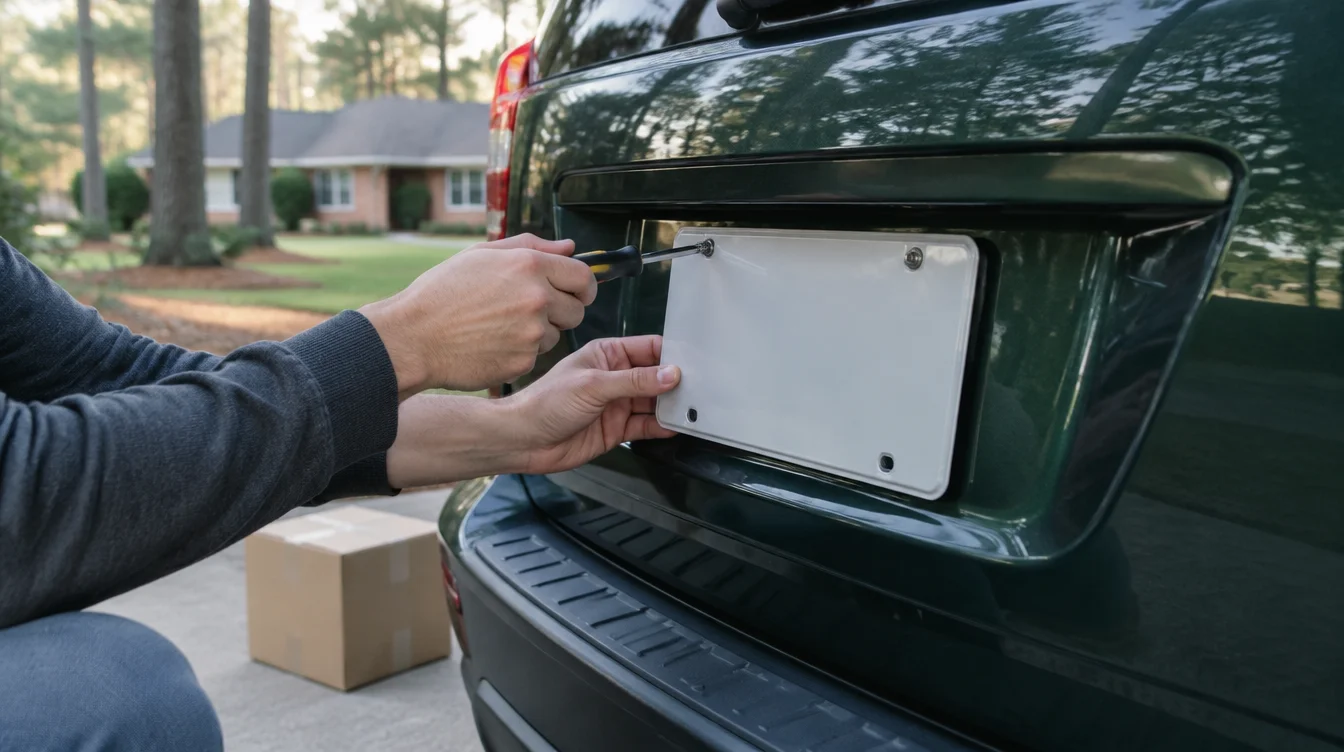
A vehicle you already own still has to be titled and registered here, and the order matters. NCDMV issues the title first, and you cannot register until the title is done, so plan for two steps rather than one visit. If your new county is one of the nineteen still in the emissions program, your vehicle needs that inspection alongside the safety one. Most arrivals we handle head for Charlotte and the Raleigh-Durham area, and addresses in the mountains west of Asheville are worth booking earlier because carriers pass less often once you leave I-40.
Vehicle transport services →
A vehicle that does not start needs a carrier with a winch and the right loading setup, and that is a smaller pool than standard open transport. Tell us the condition up front, including whether it rolls, steers and brakes, and we match it to a carrier equipped for it rather than discovering the problem at pickup. The same applies to a project car coming home from a workshop or a long-stored vehicle leaving a garage.
Quote a non-running vehicle →
Work, retirement and relocation take vehicles out of North Carolina in every direction, and Ohio, Georgia and Florida are among the destinations people search for most, with a dedicated guide for North Carolina to Ohio car shipping. We arrange pickup from Charlotte, Raleigh, Durham, Greensboro, Winston-Salem and the towns between them, then hand the vehicle to a carrier already working that direction. Two things are worth knowing on these lanes. Outbound and inbound do not price the same, because the state sends vehicles to different places than it receives them from. And between June and November, storm activity on the coast can push carriers off I-95 for a few days at a time. The more notice you can give on a destination and a workable date, the more options open up.
Estimate a long-distance move →Looking to ship your car to another state or across the country? Rivalane arranges transport between North Carolina and all 50 states. Pick a state to see how that route works.
North Carolina does not have one dominant metro the way most states do. Charlotte and Raleigh sit roughly 165 miles apart with Greensboro, Winston-Salem and High Point spread between them, while Durham, Fayetteville, Wilmington and Asheville each anchor a region of their own. That spread is why the delivery address matters more here than the city name. Find your ZIP code below to check coverage on your route.