





Expect about 640 to 960 miles from New York to Kentucky through Pennsylvania and Ohio, with delivery typically 2 to 4 days after pickup. Sedans on open transport tend to cost $700 to $1,100, least to Louisville and Northern Kentucky. Book two weeks ahead for June and apply for Kentucky registration within 15 days.
How Car Shipping From New York to Kentucky Works
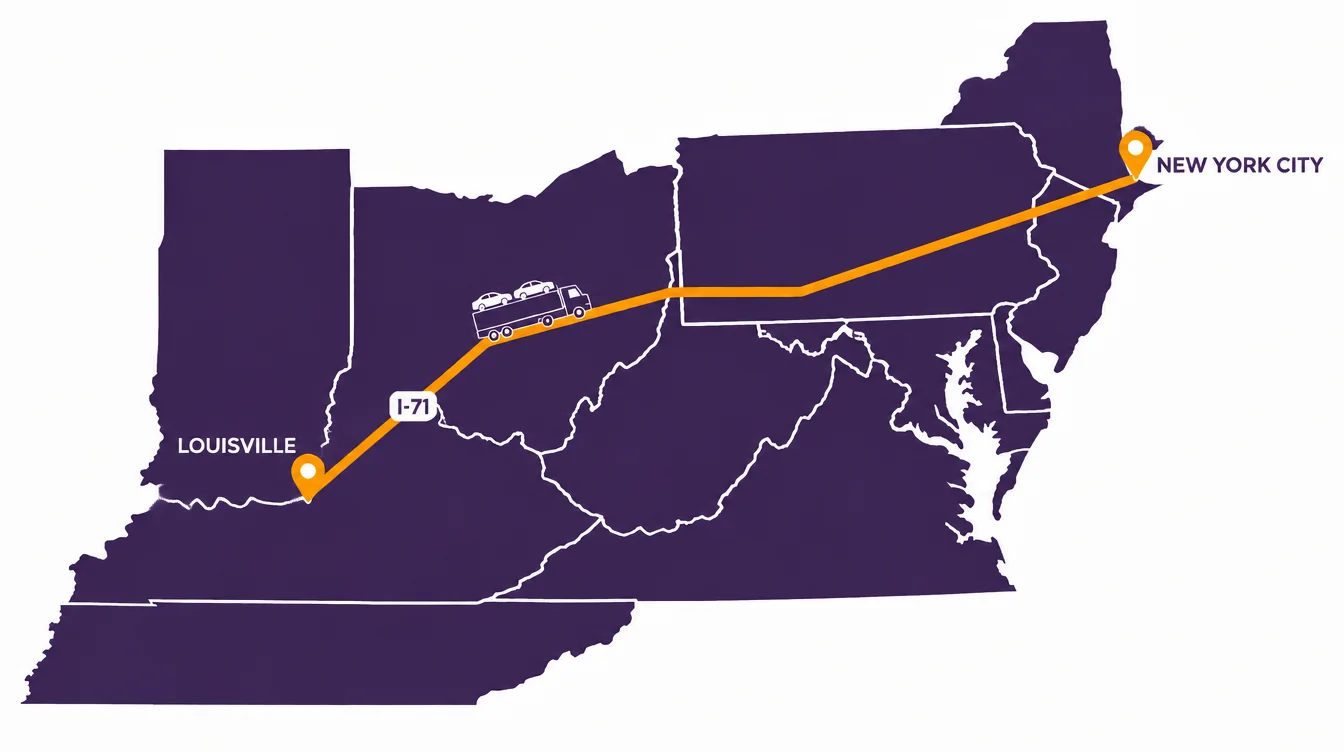
A car headed from New York to Kentucky usually leaves the metro area westbound across New Jersey and spends a long stretch on the Pennsylvania Turnpike before turning onto I-70 and crossing the West Virginia panhandle into Ohio. At Columbus the truck swings southwest on I-71, passes Cincinnati and crosses the Ohio River into Covington, where Northern Kentucky deliveries come off. Louisville is roughly another 100 miles down I-71, and Lexington sits on I-75 south of Cincinnati, although some routings reach it on I-64 through West Virginia instead. Bowling Green lies down I-65 beyond Louisville, and Paducah in the far west is the longest haul on the lane, roughly 200 miles past Louisville. The same load may carry cars for Ohio or beyond, so Kentucky may be one stop of several. The slow part is rarely the highway. It is the wait before loading, as dispatch lines up space on a truck heading west that can reach your pickup.
How Much Does Car Shipping New York to Kentucky Cost?
Mileage sets the baseline on a run of 640 to 960 miles, but two things move a quote more than the odometer does: where in Kentucky the car ends up, and how easily a truck can load it in New York.
Northern Kentucky and Louisville lie on I-71 itself and usually price lowest. Lexington adds a turn south on I-75, Bowling Green a run down I-65, and Paducah or other western Kentucky addresses sit far enough past Louisville that the quote climbs with them. Towns in the eastern mountains, well away from any interstate, price on the length of the detour a truck needs to reach them.
A sedan fits nearly any slot on an open trailer. An SUV, pickup or van takes deck space another car could have filled, so it costs more to move.
Ask questions before you accept a quote that lands far below the rest. Often no truck has signed on at that number yet, and it shifts once dispatch starts looking for one.
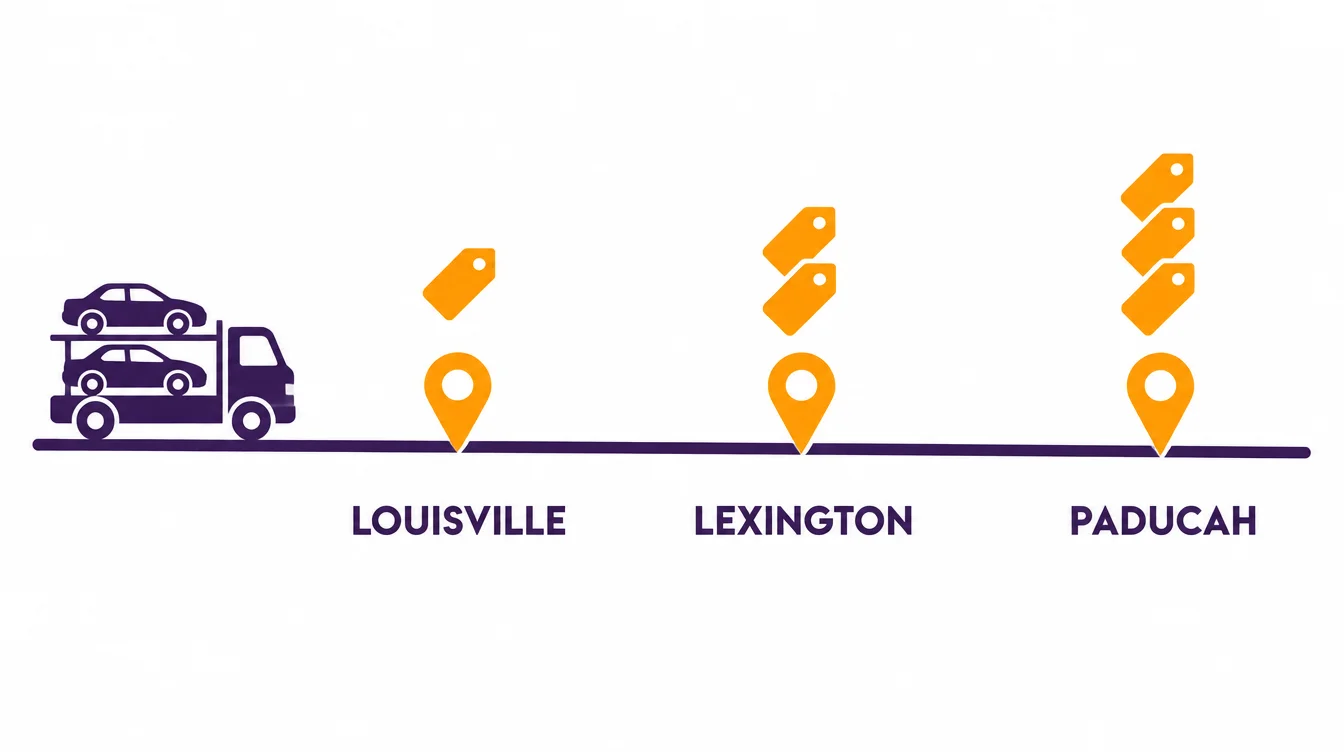
Plan on $700 to $1,100 to ship a standard sedan open from New York City to Louisville. Picking up outside Manhattan on flexible dates and delivering to Northern Kentucky or Louisville pulls the price toward $700. A Manhattan curb, a date locked in during the June rush or a western Kentucky address pulls it toward $1,100, and Paducah or a far upstate pickup can land above it.
Covered trailers usually run 40 to 60 percent above the open rate, which pays off for collectible cars, exotics and anything too low for normal ramps.
Three details carry more weight than distance on this lane:
- Kentucky address. Covington, Florence and Louisville sit on I-71 and price best. Lexington and Bowling Green add a leg off that line, and Paducah and the rest of the far west cost the most.
- New York address. The outer boroughs, Staten Island, Long Island and Westchester load with the least fuss. Manhattan usually means a meeting spot a few blocks from home, and Buffalo, Rochester or Syracuse depend on a truck already working upstate.
- Vehicle type. Budget another $100 to $200 for an SUV or pickup. Winching a non-runner aboard thins the list of carriers and lifts the rate.
When one offer lands well under the rest, find out if a carrier has signed on at that price. A figure no truck has taken is an estimate, not a booked shipment.

What Factors Actually
Influence Pricing on This Route?
Booking early protects your timeline, keeps pricing steady, and reduces the risk of last-minute carrier changes.
Many customers on this route relocate permanently or move seasonally, which makes predictability more important than speed.
This article explains how auto transport Alabama to New York works, what it costs, and how long it takes, so you can make a clear, informed decision before you schedule your shipment.


Type
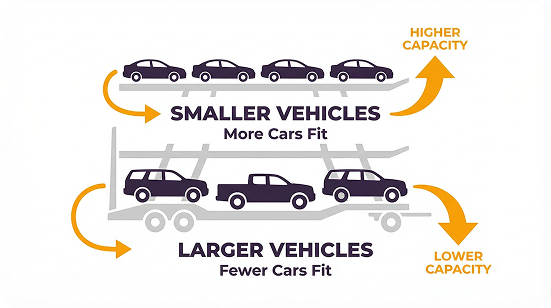
Size decides how much deck space your vehicle takes and how many other cars fit alongside it. A standard sedan is the cheapest thing to move because it slots almost anywhere on the trailer. SUVs, pickups and vans take more room and typically add a few hundred dollars on the same lane.


Is It Cheaper to Drive or Ship a Car From New York to Kentucky?
Shipping Instead of Driving
Shipping makes sense when you are taking a flight to start work in Kentucky, when a buyer in Louisville or Lexington has bought your car, or when a student needs a car on a Kentucky campus and nobody can spare two days on the road. Families also use it to send a second car ahead of a move.
One handoff in New York replaces roughly 700 miles of turnpike and interstate, plus a night in a motel somewhere in Pennsylvania or Ohio.
Driving the Route Yourself
New York City to Louisville is roughly 740 miles, which route calculators put at about 11 and a half to 13 hours at the wheel before traffic and stops. Many drivers break it with an overnight in western Pennsylvania or Ohio, and the Pennsylvania Turnpike tolls, fuel and meals come on top.
If you are relocating and keeping the car, the road trip usually wins on cost. Shipping comes out ahead once a return flight to New York enters the picture, when a household has two cars and a single driver, or when a January storm in the Pennsylvania mountains makes the drive a gamble.
How Long Does Shipping a Car From New York to Kentucky Take?
Kentucky delivery usually comes 2 to 4 days after loading. Northern Kentucky and Louisville tend to be the quicker drops, and Lexington, Bowling Green and western Kentucky more often take the full span.
Loading day is the part that moves. Getting a carrier assigned usually takes one to three business days once you book, and offering a spread of pickup dates lets dispatch use a truck that already has westbound room.
At a typical 400 to 500 miles of driving per day, the 640 to 960 miles on this lane add up to two or three driving days, plus stops for the other cars aboard.
When is the Best Time to Book Auto Transport From New York to Kentucky?
Demand on this lane builds through late spring and is highest around June, then eases after midsummer. Winter is quiet here, and the route has no seasonal swing like the snowbird runs to Florida.
For a pickup between late May and the end of June, book about two weeks ahead. For most of the rest of the year, a week of notice usually covers it.
From December through February, snow and ice on the mountain section of the Pennsylvania Turnpike, and in eastern Kentucky, can cost a truck a day. Build some slack into a winter delivery date.
Open vs Enclosed Auto Transport on a New York to Kentucky Route
Most cars on this route go on an open carrier, and for most owners that is the right call. The car travels uncovered alongside others and meets rain and grit much like the drive itself would bring.
A covered carrier holds the car behind walls and a roof from New York to the delivery address. That protection is most useful in winter, when salt spray builds up along the turnpike and I-70. Because each covered trailer takes fewer cars, the price is higher and open slots are scarcer.
Choose covered transport for a show car, an exotic, a car with new paint or one that sits too low for normal ramps. Commuter cars, student cars and second family cars travel well on an open carrier.
Enclosed Car Transport
Enclosed demand rises for high-value, specialty and seasonal vehicles, and enclosed trailers protect against road debris and weather, which matters most on longer hauls. Enclosed rigs are a small fraction of the trailers working any given lane, and that scarcity is what drives both the higher price and the longer booking lead time.
Open Car Transport
Most vehicles move on open trailers, and for most routes that is the more cost-effective way to ship a car.
Open transport works well for standard vehicles and keeps costs predictable. It also offers the widest carrier availability.
What Kentucky Requires When Your Car Arrives
Kentucky moves quickly on cars brought in from another state. The car has to be insured in Kentucky and inspected before the county clerk will title it, and the registration clock is short, so line up those steps in the first days after delivery.
- 15 days to apply for registration. Kentucky law gives anyone who brings a vehicle into the state 15 days to apply for registration with the county clerk where they live. The state's new-resident page asks for title and registration within 10 days, so plan on the earlier date.
- Kentucky insurance comes first. You cannot drive the car in Kentucky until it carries Kentucky insurance, and the clerk wants proof issued within the last 45 days. Minimum liability coverage is $25,000 for one person's injuries, $50,000 for everyone hurt in a crash and $25,000 for property damage, or one $60,000 limit.
- An inspection before titling. A certified inspector designated by the county sheriff compares the VIN on the car with your paperwork and records the odometer reading. It verifies identity rather than safety. The fee is $15, plus $20 if the inspector travels to the car, and a passed inspection is honored in every Kentucky county.
- Title paperwork. Bring the Application for Kentucky Certificate of Title or Registration (form TC 96-182), your New York title, proof of the passed inspection, and a Kentucky license, Kentucky ID or Social Security card. The county clerk can request a title held by a lender directly from that lender.
- Usage tax at 6 percent. The clerk collects Kentucky's motor vehicle usage tax the first time the car is registered in the state. Kentucky credits a similar tax you paid in another state when that state credits Kentucky in return, and the only state its Department of Revenue lists as not qualifying is Georgia. Bring your New York registration, a title showing the tax, or a purchase contract listing it, and confirm the credit with your clerk.
- Your Kentucky license. Switch to a Kentucky license no later than 30 days after taking up residence. It is issued in person at a Driver Licensing Regional Office. A valid New York license transfers without testing, and a standard eight-year license costs $43, or $48 for REAL ID.
- Students and military. A U.S. citizen enrolled at a Kentucky college may keep driving on a New York license that is still valid, alongside a student ID, and active-duty service members named on the title may keep out-of-state insurance.
Source: Kentucky Transportation Cabinet, New to Kentucky, with the 15-day registration rule from KRS 186.020, the inspection rules and fees from KRS 186A.115, and the usage tax credit from the Department of Revenue's page and FAQ on motor vehicle usage tax. Fees and rules change, so check with your county clerk before the car arrives.
What to Expect at Pickup and Delivery
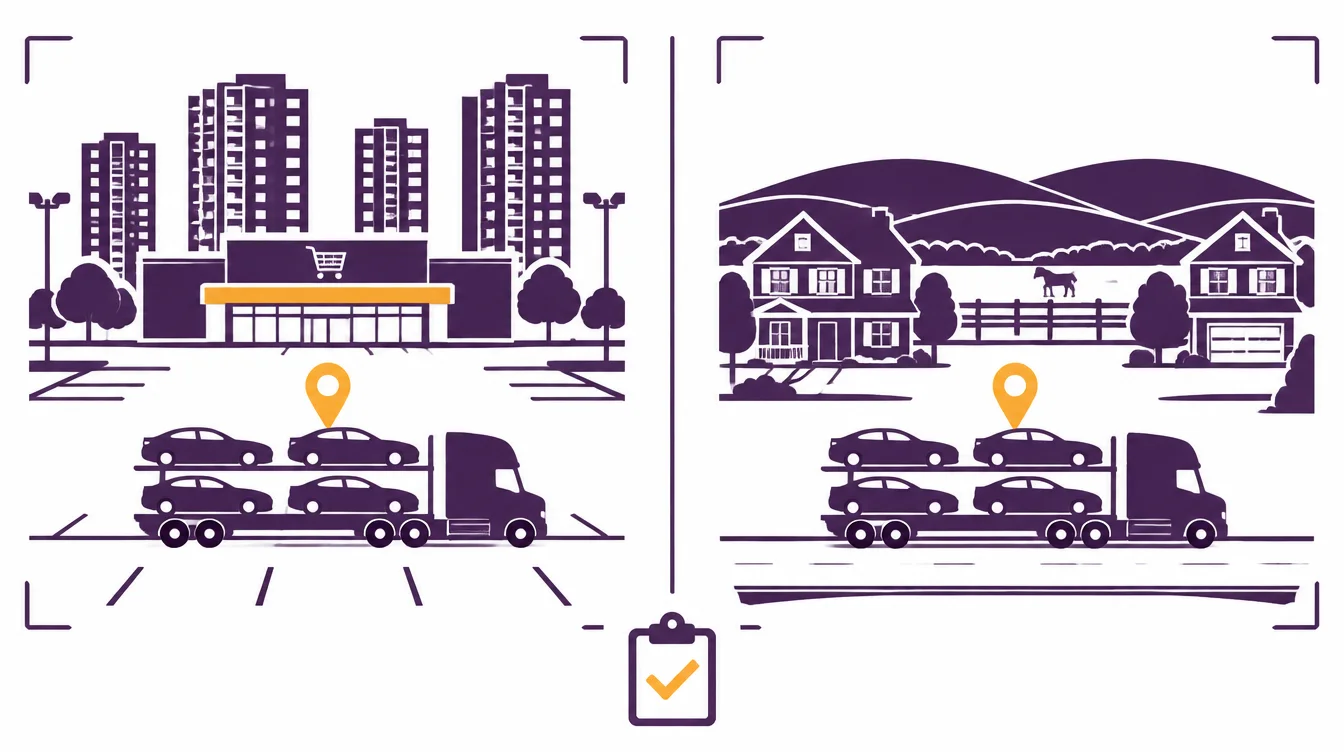
New York is usually where the planning goes. Big car haulers rarely fit on Manhattan blocks or in the denser parts of the Bronx, Queens and Brooklyn, so expect a call from the driver to pick a place with space to load, for example a grocery store lot or a quiet wide road nearby. Addresses in Nassau, Suffolk and on Staten Island often let the truck pull up near the driveway, and upstate timing follows whichever trucks are in the area.
Kentucky deliveries are mostly simpler. Suburbs around Louisville, Lexington and Northern Kentucky generally take a large truck without trouble. Older downtown blocks, subdivisions with low branches or tight turns, and rural roads in the eastern mountains can mean a handoff at a nearby lot or an interstate exit town.
Be there for the walkaround at pickup and again at delivery. The driver marks up a condition report, the bill of lading, with every mark the car already has, and you sign off only once it matches. At delivery the car is checked against that same report, and photos you date-stamp at pickup are the backup.
Key Things to Know Before Shipping a Car From New York to Kentucky
Rivalane coordinates each New York to Kentucky shipment out of Long Island, where much of this lane's planning starts, and books the car onto a carrier already running west toward Ohio and I-71. Name the Kentucky city when you book, since a Covington drop and a Paducah drop are scheduled and priced very differently.
Frequently Asked Questions



