Rivalane arranges car shipping to and from every part of Kentucky, from Louisville and Lexington out to the counties the interstates miss. Choose open or enclosed transport, and we match your vehicle to a licensed and insured carrier already working your route. Tell us the two addresses and the dates that suit you, and we will come back with what your route actually costs rather than an average.





5-Star Average Rating
Fully Insured
Top Rated Service
Nationwide Coverage
Licensed, Vetted Carriers
Car shipping Kentucky works best when every step is organized from the start. We set up the schedule, map the route, and keep the process easy to follow. You stay updated as your vehicle moves through the state. It remains protected from pickup to delivery, and timing stays consistent until it reaches the final destination.


Cost and timing depend on your route, trailer type, vehicle size, and the time of year. The ranges below reflect typical market pricing and transit windows by distance, not a commitment on either. Your quote comes from real carrier availability on your exact route at the time you book.
Kentucky does not price as one market. The state carries two freight pictures at once, and which one your address sits in matters more than the mileage does. The triangle formed by I-64, I-65 and I-71, running Louisville to Lexington and north toward the Cincinnati line, is among the busiest carrier country in the region, and I-75 adds a second north to south lane through Lexington. Louisville is a freight hub in its own right, so trucks are already moving through it rather than being sent for. I-24 does the same work in the far west around Paducah, carrying traffic between Nashville and St. Louis. Addresses on or near those roads price toward the bottom of the national range.
The eastern counties are the other picture. Once you leave the interstates for the Appalachian side of the state, carriers pass far less often, and a pickup there has to be routed rather than slotted into a run already moving. That shows up as a higher quote and a wider pickup window rather than a different level of service. Winter narrows it further in the same counties, where ice rather than snowfall is what pulls a schedule out of shape, so a January pickup east of Lexington is worth booking with more room than one on the I-65 corridor.
Vehicle size, whether the car runs, and trailer type all move the number. Moving a car in a covered trailer runs roughly 45 percent above an open one, because there is less enclosed equipment on the road. The factor most within your control is lead time. Booking a week or two ahead puts your vehicle on a truck already running I-64, I-65, I-71 or I-75 rather than one sent out to collect it, and that gap widens the further your address sits from those roads.
Get your Kentucky quoteEvery Kentucky shipment runs through the same five steps. Here is what happens at each one and what we need from you, so nothing waits on a detail nobody asked for.





Send us the pickup and delivery addresses, the year, make and model, whether the vehicle runs, and the dates you have in mind. The more exact those details are, the fewer things change later.

Pick a window that works for you. We match the shipment to a carrier already covering that route, confirm the plan, and tell you what pickup day looks like. A window of two or three days opens more options than a single fixed date.

Clear out personal items, check basic fluids, and make sure the exterior is easy to inspect. The driver completes a brief condition report before the vehicle goes on the trailer.

The carrier loads your vehicle, secures it, and records the condition again before leaving. From there it travels with the rest of the load, and you get short notices as it moves through each stage rather than having to chase for them.

When the vehicle arrives, the driver hands over the signed condition report alongside the keys. That document records how the vehicle left and how it arrived, so keep your copy rather than leaving it in the glovebox.

Most shipments come down to two choices: which trailer, and how soon. Here is what separates the options and when each one is worth paying for.
Choosing a trailer type does not mean choosing a different company. The same carrier network covers both, so the routing and the pickup planning work the same way either way. What changes is the equipment and the price.
The default for most cars, SUVs and light trucks. Your vehicle rides on an open trailer alongside others, which is why it costs less and why far more of these trucks are running at any given moment. Weather and road grime are the trade.
Worth the difference for classic, modified, low clearance and high value vehicles. Solid walls keep weather and road debris off the paint, and there is less of this equipment on the road, which is what puts the price above open.
When a date will not move, we can widen the carrier search to find something sooner. It costs more and it depends on what is actually running that week, so ask early rather than close to the day.
Collection and delivery happen at the addresses you give us, whether that is a home, a workplace or a dealership. True door to door has one practical limit worth knowing: where a street is too narrow or too restricted for a full size transporter, the driver agrees a nearby meeting point with you rather than leaving you to work it out on the day.
Every shipper claims to be reliable. Here is what actually separates a well-run move from a risky one, and what to ask before you book anyone for a Kentucky route.
Ask whether the company can name a real Kentucky constraint before you raise it, such as how they reach an address in the eastern counties once you leave the interstates, or which office issues the title at the other end. A company that already knows is one that has run the state before.
Ask whether the price you are quoted is based on your actual route and vehicle, or a generic distance estimate that gets revised once a carrier is assigned.
Ask what happens if no carrier is available on your exact date. Flexibility is worth more on a Kentucky route than the headline number, because a lane that runs daily along I-65 may run weekly to a county the interstates miss. A shipper working from an existing carrier network can usually offer alternatives faster than one starting the search when you call.
Get your Kentucky quoteDemand into and out of Kentucky comes from a few clear directions. Here is who ships most often.
.svg)
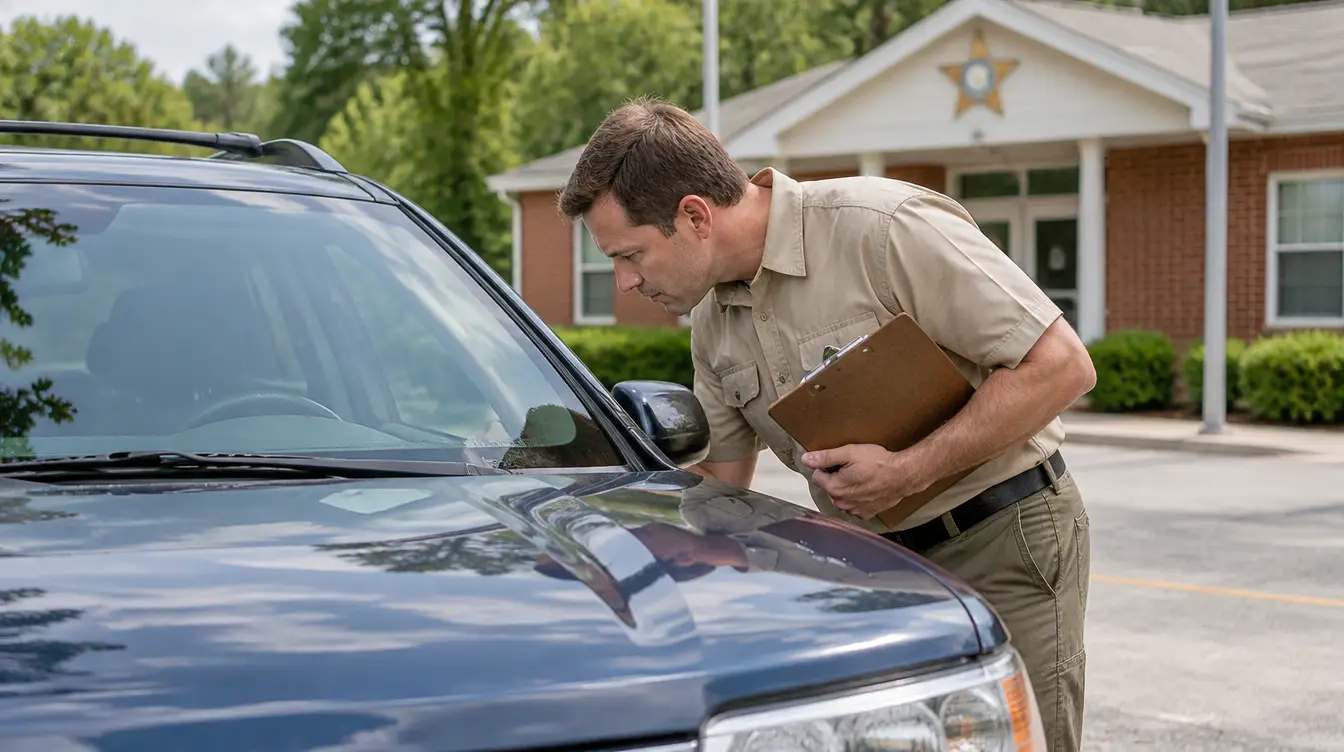
Most of the demand we see into Kentucky comes from buyers who purchased a vehicle sight unseen from somewhere else in the country. We arrange pickup from the seller or the dealership and deliver it to your Kentucky address, so nobody has to fly out and drive it back. One thing is worth knowing before you buy. Kentucky charges motor vehicle usage tax at six percent when the vehicle is titled, and your county clerk collects it rather than a state counter. Plan a second stop into your first week for the sheriff's VIN inspection, because the title cannot be issued without it.
Estimate your shipment →.svg)
A vehicle you already own still has to be titled and registered here, and the part worth handling before the car ships is the paperwork that proves what you already paid. Set aside your prior registration, your prior title where the tax is shown on it, or a purchase contract naming the buyer, the seller and the amount, while you are still packing rather than hunting for them once you arrive. For each step in order, see our guide to registering a car in Kentucky.
Vehicle transport services →
A vehicle that does not start needs a carrier with a winch and the right loading setup, and that is a smaller pool than standard open transport. Tell us the condition up front, including whether it rolls, steers and brakes, and we match it to a carrier equipped for it rather than discovering the problem at pickup. The same applies to a project car coming home from a workshop or a long-stored vehicle leaving a garage.
Quote a non-running vehicle →
Work and family moves take vehicles out of Kentucky in every direction, and the lane we are asked about most often runs to and from New York and the wider Northeast. We arrange pickup from Louisville, Lexington and the towns between them, then hand the vehicle to a carrier already working that direction. Longer lanes fill on their own schedule rather than yours, so the more notice you can give on a destination and a workable date, the more options open on both. Tell us where the vehicle is going and we will build the pickup around it.
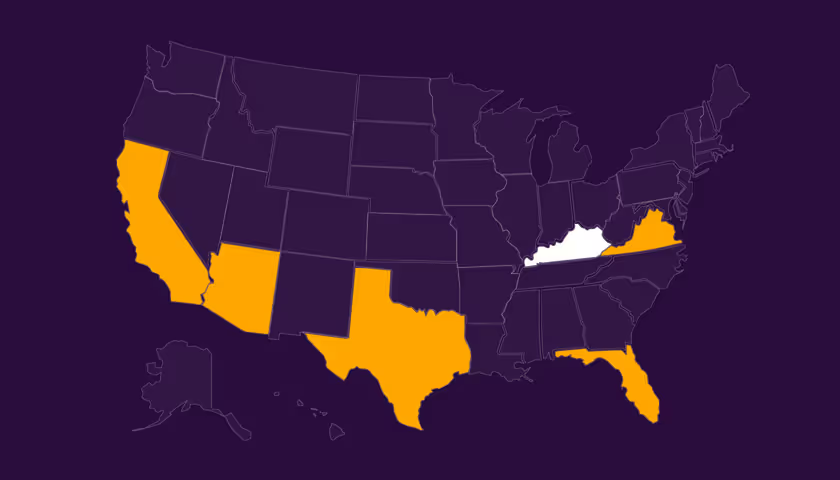
Estimate a long-distance move →Looking to ship your car to another state or across the country? Rivalane ships to all 50 states. Select a state to see how transport into and out of it works.
Kentucky touches seven states, so a large share of moves here cross a state line within an hour of pickup rather than after a day of driving. The cities below are where most pickups and deliveries happen, with the ZIP codes each one covers, though we collect from addresses well beyond this list.