


For a running sedan shipped Richmond to Los Angeles on an open trailer, the trip typically costs $1,200 to $1,700. Across our 64 mapped town pairs it covers about 2,266 to 2,987 road miles, mostly on I-40, and transit usually takes 6 to 9 days. Placing the order two to three weeks before pickup widens the choice of carriers.
Which Roads Carry a Car From Virginia to California?
Virginia to California car shipping covers about 2,266 to 2,987 road miles, measured over 64 town pairs we routed, and 48 of those pairs spend the longest part of the trip on I-40. Richmond, Norfolk, Virginia Beach and Charlottesville cars start west on I-64 to Staunton, Arlington and Winchester cars headed anywhere but the Bay Area and Sacramento join I-81 in the Shenandoah Valley, and every load for Los Angeles, Riverside, Bakersfield, Fresno or San Diego follows I-81 southwest to Knoxville. From there I-40 carries the car past Nashville, Memphis and Little Rock. Los Angeles, Riverside, Bakersfield and Fresno loads stay on it through Oklahoma City, Amarillo, Albuquerque, Gallup and Flagstaff to Barstow, while San Diego cars turn off for Dallas, El Paso and Tucson and finish on I-10 and I-8. Sacramento runs, and San Francisco runs from everywhere except Roanoke and Bristol, take a northern line instead that ends on I-80 past Lincoln in Nebraska, Cheyenne, Salt Lake City and Reno.

What Does Virginia to California Car Shipping Cost?
Your quote depends on your vehicle, the exact pickup and delivery addresses, the season and the trailer type, so run the calculator for a figure on your dates.
Within California, the delivery city moves a quote more than most people expect. From Richmond, Riverside is the nearest of the cities we mapped at about 2,590 road miles, Los Angeles, Bakersfield and San Diego all fall between roughly 2,620 and 2,640, Fresno comes in near 2,750 and Sacramento near 2,790, and San Jose and San Francisco run close to 2,880. Our California car shipping page covers delivery towns not listed here.
The Virginia end shifts the mileage as well. Measured to Los Angeles, a Bristol pickup saves about 320 miles over Richmond and a Roanoke pickup about 175, Charlottesville trims around 70 and Winchester is close to even, while Arlington, Norfolk and Virginia Beach add roughly 50 to 105. More pickup areas appear on our Virginia car shipping page.
The rest of a quote comes down to the vehicle and the calendar. A large SUV or pickup needs a bigger slot on the deck, and winter snow in the high desert along I-40 can slow the western part of the trip. Our cross-country car shipping cost guide explains long-haul pricing in more depth, and the car shipping calculator gives an instant estimate for your exact towns.

Richmond to Los Angeles, with a running sedan riding an open trailer, usually falls between $1,200 and $1,700. Your exact figure inside that range mostly reflects the two end towns, and the longest pair we routed is about 720 road miles longer than the shortest.
Bigger vehicles cost more, with roughly $150 to $250 added for a full-size pickup, a minivan or an SUV with three rows. Going enclosed instead of open usually raises the price 40 to 60 percent.
On this lane, three things shape a quote most:
- California delivery city. Riverside and Los Angeles sit nearest to Virginia, while the Bay Area lies farthest away.
- Virginia pickup town. A Bristol or Roanoke start shortens the run against Richmond, and a Hampton Roads start stretches it slightly.
- Season. Snow in the high country of Arizona and New Mexico on I-40, and across Wyoming on I-80, can delay a pickup or slow the back half of the trip.
If one bid comes in well under the rest, find out what it leaves out before you commit.

What Factors Actually
Influence Pricing on This Route?
Five things move the price on any lane: the vehicle's size, whether it runs, how easy each end is to reach, the season and the trailer type. Booking early protects your timeline, keeps pricing steady and reduces the risk of last-minute carrier changes.


Type
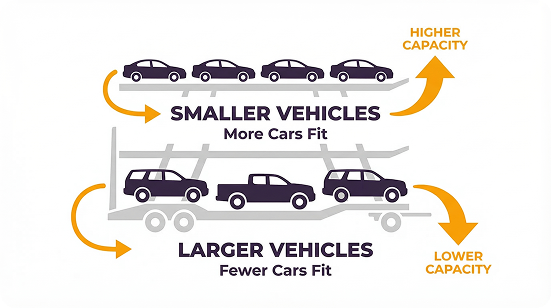
Size decides how much deck space your vehicle takes and how many other cars fit alongside it. A standard sedan is the cheapest thing to move because it slots almost anywhere on the trailer. SUVs, pickups and vans take more room and usually cost more on the same lane.


Is It Better to Ship or Drive a Car From Virginia to California?
Reasons to Ship
Shipping suits a Virginia household starting a new job in Los Angeles, San Diego or the Bay Area, a student starting at a California college who prefers to fly, and a couple with two cars and only one of them willing to make the long drive. Everyone can take a flight while the car makes the trip on a carrier.
It also keeps about 2,600 miles of interstate off the car, plus what the drive would cost in fuel, tires and motel nights. Heading northwest instead? See our Virginia to Washington car shipping route.
Reasons to Drive
Driving can come out cheaper for two people who can trade off at the wheel and have no firm arrival date, and if driving is the better deal for your move, we will tell you plainly. Our routing has Richmond to Los Angeles at roughly 46 hours of driving, or five to six long days after fuel, meals and overnight stops.
For one driver with a start date to meet, shipping usually makes more sense, since even the shortest pair we mapped, Bristol to Riverside, runs close to 2,270 miles.
How Long Does It Take to Ship a Car From Virginia to California?
Most cars reach California 6 to 9 days after loading. Bristol to Riverside, at about 2,270 miles the shortest pair on our map, usually lands early in that window, while Virginia Beach to San Francisco, the longest at close to 2,990, typically uses most of it.
Rivalane typically lines up a carrier one to three working days after the order goes in, and a flexible pickup window means more westbound trucks to pick from.
Long-haul trucks typically log 400 to 500 miles a day, which puts Richmond to Los Angeles at roughly five to seven driving days, with the halfway point just west of Oklahoma City. In winter, snow in the high desert on I-40 or across Wyoming on I-80 sometimes costs an extra day or two.
When Should You Book Car Shipping From Virginia to California?
Two to three weeks of lead time works well on this lane. That gives Rivalane time to find a licensed carrier with a westbound load planned and an open spot on its trailer, rather than settling for the first truck that responds.
If your dates are fixed, say so when you book, since a firm pickup day narrows the set of trucks that fit. In winter, leave a little slack for weather on the high desert part of I-40 and on I-80 through Wyoming.
Shipping from North Carolina as well? The North Carolina to California car shipping route shares I-40 with this one from Knoxville west.
Open or Enclosed Transport From Virginia to California?
On this lane, open transport is the usual choice, with the car on a two-level hauler of the kind seen on any interstate. Over roughly 2,600 miles it sees what a road trip would bring, with Virginia rain or winter road salt at the start and desert dust and strong sun across the Southwest.
Pick enclosed transport and the vehicle travels in a hard-sided trailer the whole way, shielded from rain, dust and road grit. Each of those trailers holds fewer vehicles, which raises the price, and booking one on short notice can take extra time.
Classic and collector cars, exotics and fresh paint jobs usually go enclosed, and everyday cars usually go open.
Enclosed Car Transport
Enclosed demand rises for high-value, specialty and seasonal vehicles, and enclosed trailers protect against road debris and weather, which matters most on longer hauls. Enclosed rigs are a small fraction of the trailers working any given lane, and that scarcity is what drives both the higher price and the longer booking lead time.
Open Car Transport
Most vehicles move on open trailers, and for most routes that is the more cost-effective way to ship a car.
Open transport works well for standard vehicles and keeps costs predictable. It also offers the widest carrier availability.
Moving a Virginia Car Onto California Registration
This move has paperwork at both ends, and the order matters: Virginia coverage stays in place, California registers the car, and only then is Virginia closed out.
Before the car leaves Virginia. Leave the Virginia insurance alone for now. The Virginia DMV says never to drop it before the Virginia plates are surrendered, because ending coverage while the plates and registration are active could get driving and registration privileges suspended.
The 20 day window in California. California gives you 20 days, counted from the day you become a resident or the day the car enters the state, to move an out-of-state registration over. Planning to live there at least six months a year counts as residency, and a California job or voter registration points the same way. If you will be driving, apply for a California driver license as well.
At the DMV. Bring the last Virginia title and registration, form REG 343 with a signature from each registered owner, and form REG 31, the vehicle verification that a law enforcement officer, DMV staff or a vehicle verifier licensed by California can complete. If the Virginia title cannot be handed over, the car gets a registration stamped Nontransferable and no California title. A smog certification applies to gasoline cars of model year 1976 or later and to diesels of 1998 or later below 14,001 pounds, with motorcycles exempt. Expect registration, transfer and use tax fees as well, which the DMV fee calculator can estimate. A car newer than 2 years with under 7,500 miles generally cannot be registered by a California resident unless it meets California emission rules or an exemption covers it.
Closing out Virginia. With the California registration done, return the Virginia plates, which the Virginia DMV wants back, through its website, at one of its customer service centers or by mail. Plates mailed in with form FMS 210 while six or more full months remain on the registration can qualify for a partial refund, and an online surrender cannot. Let the Director of Finance or Commissioner of the Revenue where you lived know about the move, which ends the local personal property tax on the car. Step by step help is in our Virginia plate return guide and our California guide for registering a car from another state.
Official sources: the California DMV New California Resident Portal and its out-of-state registration brochure, plus Virginia DMV pages on leaving Virginia and surrendering plates. Requirements and fees can change, so check with the DMV before the car arrives.
What Happens at Pickup in Virginia and Delivery in California
Pin down where the truck will meet you at each end before any carrier is booked. A fully loaded hauler needs a long, level spot to park, lower its ramps and pull back out, which many residential streets lack.
On the Virginia side, roomy subdivision streets in the Richmond suburbs and Hampton Roads often have space for the truck. Historic blocks in Old Town Alexandria, townhouse rows in Arlington, gated neighborhoods and winding roads in the Blue Ridge more often mean meeting the driver at a shopping center or a big lot close to the interstate.
California deliveries follow the same logic. Steep streets in San Francisco, hillside neighborhoods around Los Angeles, crowded beach towns and communities with gate rules commonly move the delivery to a nearby lot, while wide streets in the Inland Empire, Bakersfield and the Central Valley usually fit a truck.
Inspect the car alongside the driver before signing anything at pickup, and make sure the condition report lists each existing scratch and dent. Delivery is judged against that report, so take dated photos of the car from every side as your own record.

Key Things to Know Before Shipping a Car From Virginia to California
Rivalane runs each booking from its Melville, New York office, places the car with a licensed carrier bound west and keeps you updated with real-time tracking through delivery. Once you live in California, register the car within 20 days, and do not cancel the Virginia policy until the plates have gone back to the Virginia DMV.
Frequently Asked Questions