What Classic Car Transport Involves
Classic car transport moves a vehicle whose value sits in its originality, its condition, or the years of restoration behind it. That changes the job. A daily driver absorbs a stone chip on the interstate without anyone noticing. A car with original paint, a freshly trimmed interior, or a drivetrain that has not turned in a decade does not.
Most owners book a classic through a broker rather than calling carriers one by one. The broker arranges the move and matches the car to a carrier equipped for it. The carrier is the company that physically hauls the vehicle. Rivalane works as a property broker, so the truck that arrives belongs to a vetted carrier in our network, and that split decides who holds the insurance, who signs the paperwork and who you call about the route. Our guide to the difference between auto transport brokers and carriers covers how to tell which one you are dealing with.
What follows are the decisions that actually change the outcome: the trailer, the price, the insurance, and what to have ready before the driver arrives.
Open vs Enclosed Transport for Classic Cars
The trailer decision comes first, because most of the others follow from it.
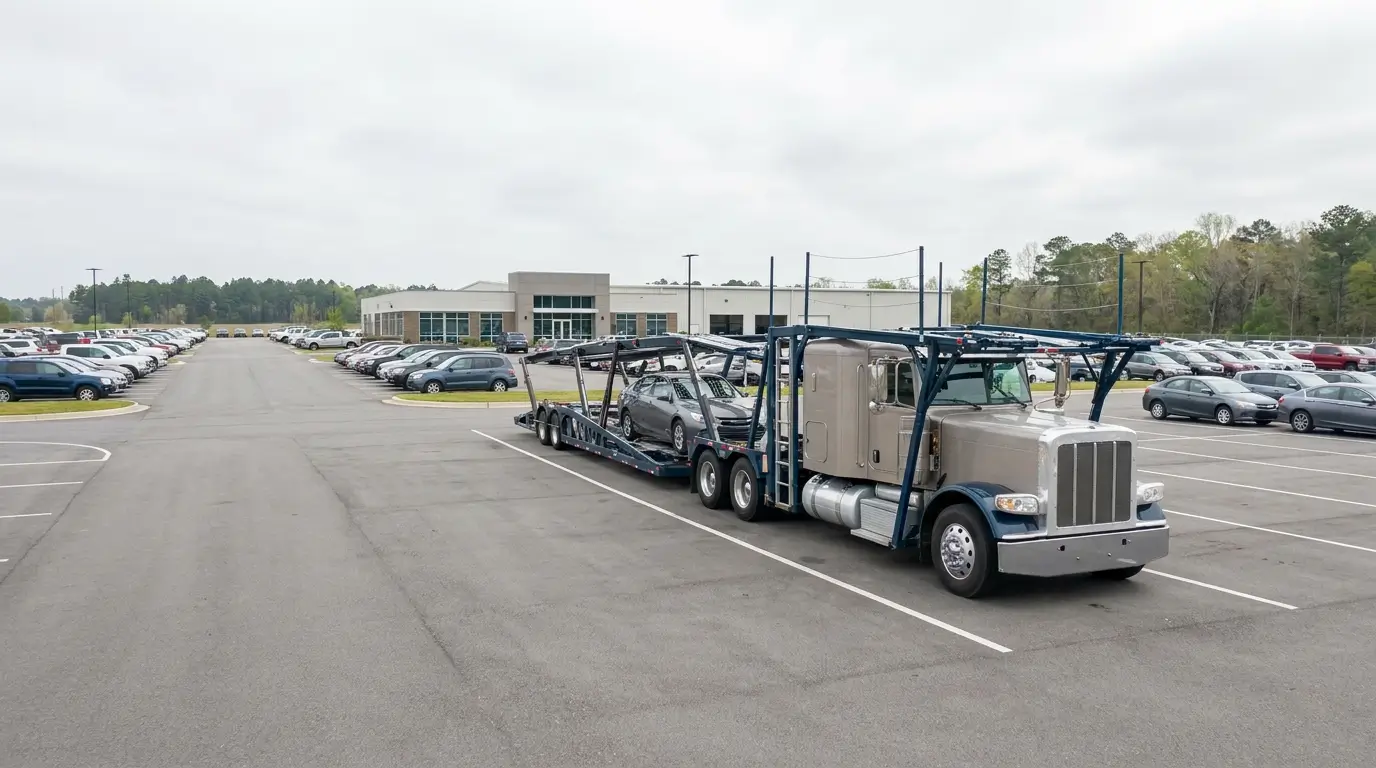
Open transport carries your car on an exposed deck alongside other vehicles. It costs less, it has far more capacity on almost every route, and it is how the overwhelming majority of cars in the country move. It also leaves the car in the weather and in the path of road debris for the entire journey.
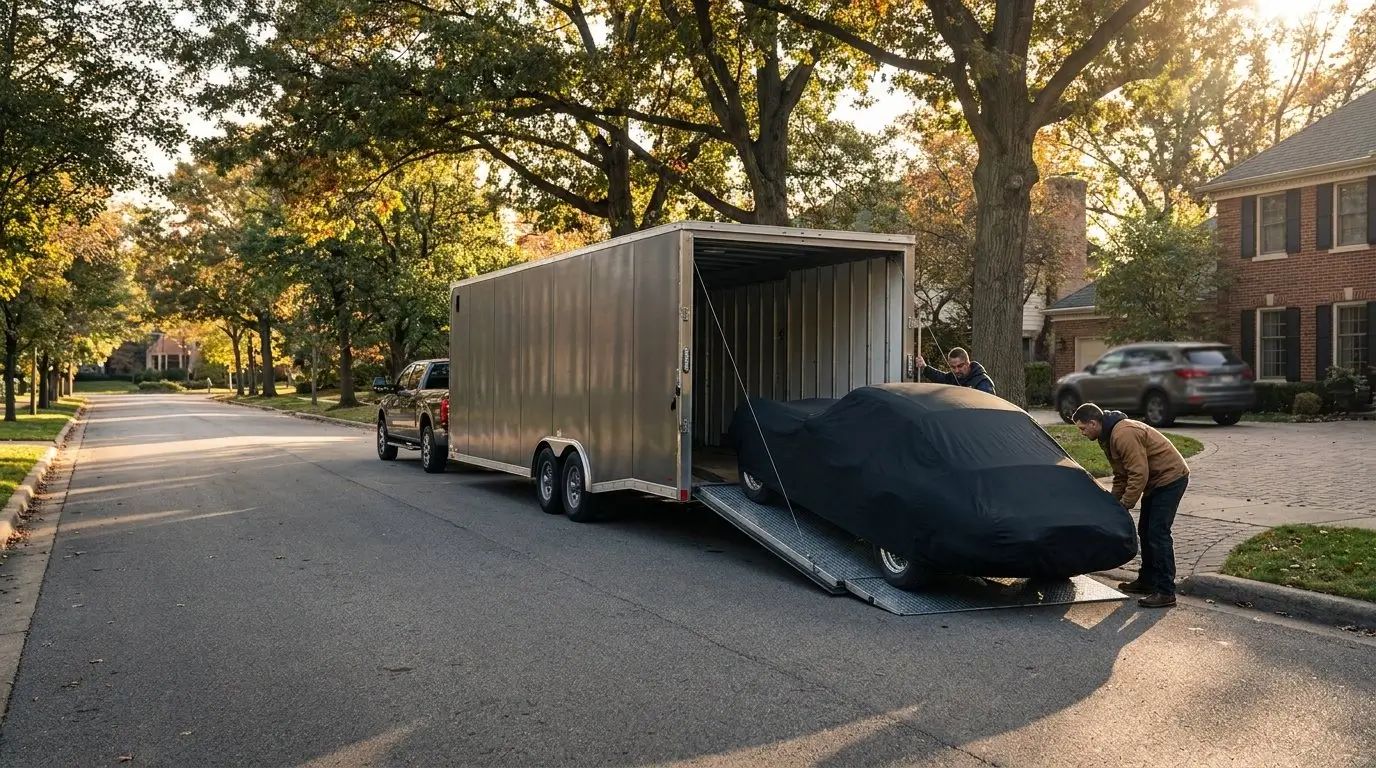
Enclosed transport puts the car inside a covered trailer. Weather, dust and stone chips stop being a factor and the car travels out of sight. For a concours entrant, an original paint survivor, or any car whose condition is the point, enclosed is the normal choice among collectors. Our comparison of open and enclosed car shipping works through the trade-off, and enclosed auto transport explains how we arrange it.
Multi-Vehicle and Single-Vehicle Enclosed Trailers
Enclosed then splits again, and the difference is handling rather than protection. A multi-vehicle enclosed trailer carries several cars, which keeps the cost closer to open transport and gives you more dates to choose from, at the price of more loading and unloading around your car. A single-vehicle enclosed trailer carries yours alone, so it is loaded once and unloaded once, which is what owners of irreplaceable cars are usually paying for.
What Classic Car Transport Costs
No honest quote exists before someone knows the route and the car. Two identical Corvettes moving the same week can price differently because one is going between major metros on a busy corridor and the other is going to a farm road three hours from the nearest interstate.
The factors that move a classic car transport quote are the distance and the route's carrier traffic, whether you book open or enclosed, the size and weight of the car, whether it runs and can be driven onto the trailer, how easily a full-size transporter can reach both addresses, the season, and how much notice you give. Show and auction weekends compress demand on the routes into an event, which tightens availability on exactly the dates everyone wants.
The way to get a number that means something is to price your actual shipment. Run the route through our car shipping calculator, or contact us with the details of the car.
Collector, Antique, and Vintage Cars: What Changes
Collector car transport, antique car transport and vintage car transport describe overlapping things, and the labels matter less than the physical facts of the car. What the carrier needs to know is what the vehicle will do on a ramp.
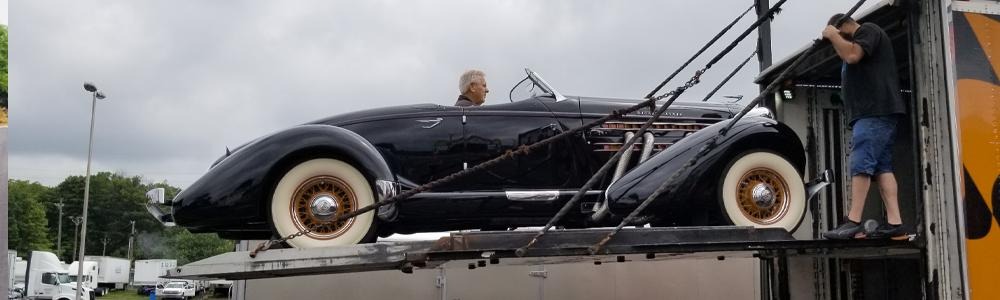
Low ground clearance is the most common complication. Pre-war cars, lowered customs and many sports cars cannot clear a standard ramp angle, so the carrier assigns a trailer that can load at a shallower angle. Say so when you book rather than when the truck arrives.
A car that does not run is routine but not automatic. Rivalane's terms define an inoperable vehicle as one that cannot function or be driven for any reason, including parts that have been removed, altered, damaged or deteriorated, covering the engine, transmission, wheels, steering, brakes and tires. A barn find with seized brakes and a car with a healthy engine but no battery are both inoperable for transport purposes, and both need a winch. Tell us which parts are affected so the right equipment is assigned the first time.
Modified cars need the same treatment. Wide bodywork, oversized wheels, roll cages and roof-mounted equipment change the dimensions the carrier plans around, and custom wheels change how the car should be secured. Owners moving several cars at once, or shipping alongside a bike, can see how we handle that on our auto and moto enthusiasts page.
How Insurance Works on a Classic Car Shipment
This is where owners of valuable cars are most often surprised, and the structure is worth understanding before you book rather than after delivery.
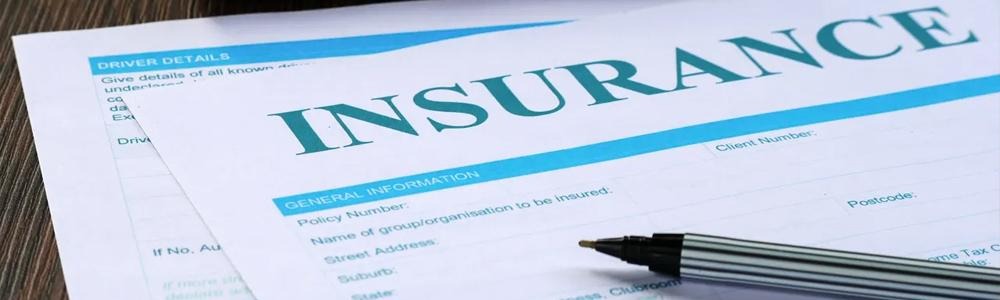
The carrier that moves your car holds cargo insurance covering damage that happens in transit. Under Rivalane's terms, the party liable for a cargo loss or damage claim is the carrier and not the broker, and a claim is filed directly with the carrier that transported the vehicle. If you do file one, report it to us no later than forty-eight hours after delivery so we can supply the carrier's documentation while it is still useful to you. Claims against motor carriers are governed by federal law, principally the Carmack Amendment at 49 U.S.C. 14706, which is the framework your claim will actually be decided under.
Ask for the carrier's insurance certificate and read the limit before you commit. Policy limits, deductibles and exclusions differ between carriers, and pre-existing damage is not covered by any of them. Our guide to auto shipping insurance covers what those policies typically include and where the gaps sit.
When You Need Supplemental Coverage
If the car is worth more than the carrier's policy limit, the difference is your exposure and nobody else's. Closing it takes four steps:
- Get a current professional appraisal of the car
- Confirm the assigned carrier's cargo limit in writing
- Ask your collector insurer whether your policy extends to transit, and add a rider if it does not
- Photograph the car in daylight, panel by panel, before it loads
Documentation is the half of this that costs nothing. Dated photographs, a written condition record and your restoration file are what turn a disagreement at delivery into a claim with evidence behind it. The document that carries the official condition record is the bill of lading, and it is worth knowing what it does before the driver hands it to you.
Shipping to Shows and Auctions
Events run to fixed schedules, which makes them the least forgiving kind of classic car shipment. A move-in window closes whether or not your car is there.
Book as soon as the date is confirmed. Early booking is what buys you a choice of carrier and trailer rather than whatever remains, and it matters most around the weekends when the whole hobby is moving in the same direction. Give us the event name, the move-in window and any venue access rules when you request the quote, because many venues restrict when a full-size transporter can enter and where it can unload.
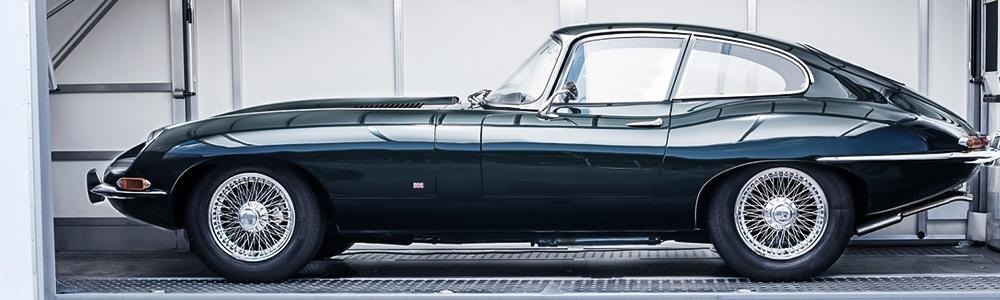
A well-planned show shipment looks unremarkable from the outside. The owner of a restored E-Type heading to a concours books single-vehicle enclosed several weeks ahead, confirms the carrier's insurance limit against a current appraisal, photographs the car before it loads, and gives the carrier the venue's move-in times. The car arrives with a day in hand and goes straight onto the field. The rushed version of the same move has fewer carriers to choose from, less room in the schedule and more that can go wrong.
We cover the logistics of specific events in more depth: Mecum Dallas, the Goodguys Lone Star Nationals, the Goodguys Colorado Nationals and Fall Carlisle. If you bought the car at auction rather than shipping one to it, our guide to shipping a car bought on Bring a Trailer covers collecting from a private seller.
How to Prepare a Classic Car for Transport
Preparation is mostly about making the car easy to inspect and safe to load. Wash it first, because a clean car makes existing chips and scratches visible to both of you at pickup, and an accurate condition record at pickup is what protects you at delivery.
Leave the fuel low, around a quarter tank, since fuel is weight the carrier is planning around. Remove personal items and anything loose in the cabin. Take off or secure removable parts that could move in transit, including spare wheels, tonneau covers, mascots and badges that are no longer tight. Disable the alarm, or tell the driver how to, so it does not run the battery flat somewhere in Nebraska.
Then tell the carrier the awkward truths about the car before it arrives. A weak battery, a temperamental starting procedure, brakes that need pumping, a clutch that bites high, low clearance, a leak worth putting a tray under. None of it is a problem the carrier cannot handle. All of it is a problem if the driver finds out at the curb.
Choosing a Classic Car Transport Company
Classic car transport companies and classic car shipping companies advertise in much the same language, so the useful checks are the boring ones.
Start with the licence. Any legitimate broker or carrier has a USDOT number and, for interstate work, an MC number, and both are searchable for free on the FMCSA SAFER Company Snapshot. Check that the name on the record matches the company quoting you. Rivalane operates under USDOT 4178374 and MC-1608310 as a broker of property. Our guide to verifying an auto transport company covers the remaining checks.
Then ask three questions and listen for specifics. What enclosed equipment will actually be assigned to this car. What is the carrier's cargo limit in writing. Who do I contact while the car is in transit. A company that answers those plainly is easier to deal with when a route changes, and routes do change.
If you are ready to price a move, run the route through our car shipping calculator, or contact us with the year, make, model and condition of the car and where it needs to go.
Frequently Asked Questions