Maryland car shipping with Rivalane starts with your route. You share the pickup and delivery points, and we match your vehicle to a licensed, vetted carrier already working that lane. Baltimore, the Washington suburbs, Annapolis and Frederick all sit within reach of I-95, I-70 and I-270, so carriers move through the state constantly. We keep you updated at each step, from the day the vehicle is collected to the day it arrives.





5-Star Average Rating
Fully Insured
Top Rated Service
Nationwide Coverage
Licensed, Vetted Carriers
Maryland car shipping turns on access more than distance. The southeastern arc of the Baltimore Beltway has been closed since the Key Bridge came down, and everything east of the Chesapeake sits behind a single crossing. We work from a carrier network already running these corridors, so your vehicle goes to a carrier that already routes around those constraints rather than one working them out on the day. You get clear pickup and delivery windows, and an update whenever the plan changes.

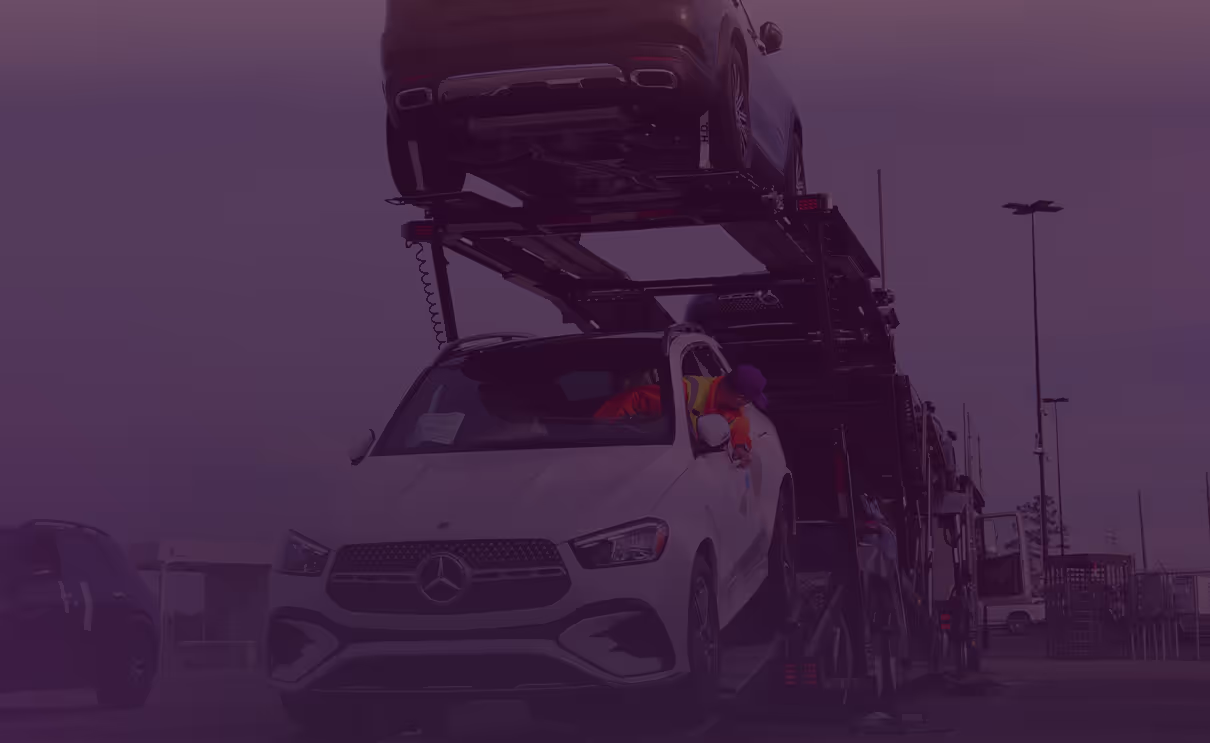
Cost and timing depend on your route, trailer type, vehicle size, and the time of year. The ranges below reflect typical market pricing and transit windows by distance, not a commitment on either. Your actual quote is based on real carrier availability on your specific route at the time of booking.
Maryland prices low because of where it sits rather than how big it is. The state straddles I-95 between Philadelphia and Washington. Baltimore is roughly 40 miles from Washington, 70 from Wilmington and 100 from Philadelphia, so a great deal of what looks like an out-of-state move is a short run on a lane carriers already work every day. Richmond, Pittsburgh, Norfolk and New York all sit inside 400 miles, so a run such as New York to Maryland car shipping stays short-haul work. Carriers price those runs on the same curve whether or not they cross a state line, which is why a Baltimore to Philadelphia move costs close to what a similar distance inside Maryland costs.
Two pieces of Maryland geography shape a route more than mileage does. The Francis Scott Key Bridge carried I-695 across the Patapsco until it collapsed in March 2024, and the Maryland Transportation Authority does not expect the replacement to open to traffic until late 2030, so the southeastern arc of the Baltimore Beltway remains closed. Harbor traffic crosses through the I-95 or I-895 tunnels instead, and loads barred from the tunnels run the western side of the Beltway. East of the Chesapeake, the Eastern Shore sits behind a single crossing, so a delivery to Salisbury or Easton is planned around the Bay Bridge rather than the distance on the map.
Vehicle size, whether the car runs, and trailer type all move the number, and enclosed transport runs roughly 45 percent above open because there is less of it on the road. Season matters at the margins, with summer and the weeks either side of the winter holidays drawing more demand than early spring. The factor most within your control is lead time. Booking a week or two ahead puts your vehicle on a truck already running I-95, I-70 or I-270 rather than one routed out to collect it, and that gap widens for addresses well off those roads.
Get your Maryland quoteFive steps take a Maryland shipment from a quote to a delivered vehicle. Here is what happens at each one, and what we need from you along the way.





Share your pickup and delivery details, and we review the full route along with the factors that shape your rate. You receive a clear, upfront quote so you know exactly what to expect before booking anything.

Choose the timeframe that fits your schedule, and we match your route with a carrier already working it. Once that carrier is assigned we confirm the pickup window and tell you what happens next.

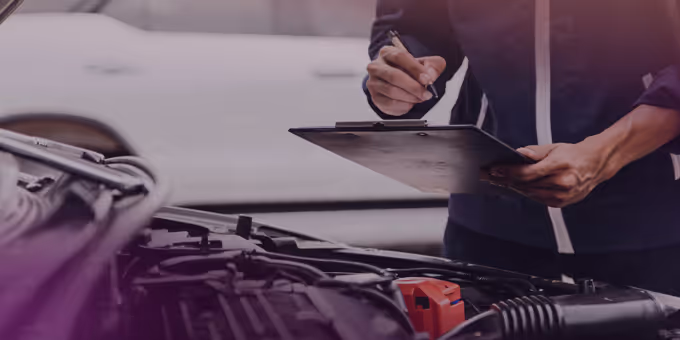
Remove personal items, make the keys easy to access, and keep the car ready for a quick inspection. Before loading, the driver completes a brief condition review so everything is accurately documented.
The carrier loads the vehicle and secures it for the route, then it travels on the lane it was assigned to. We send short updates as it moves so you know roughly where it is, and our support team is reachable for the whole transport if anything needs checking.
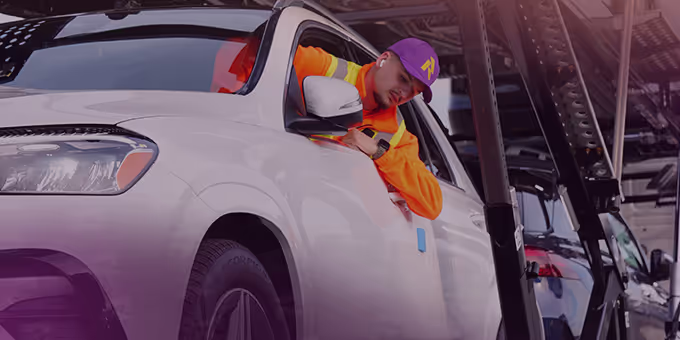
At the final stop, the driver walks the vehicle with you and confirms its condition against the inspection taken at pickup before handing over the keys. Anything noted at that point is recorded while the carrier is still there, which is the moment it is easiest to resolve. We then close out the order.

Every Maryland shipment is built from the same set of options. Pick the ones that fit the vehicle, the route and your timing, and we match a carrier to them.
We collect and deliver across Maryland, not only along I-95 and I-70. That takes in Western Maryland around Hagerstown and Cumberland, and the Eastern Shore towns behind the Bay Bridge, where fewer carriers pass and booking earlier gives you more to choose from.
The standard choice for everyday cars, SUVs and trucks. Your vehicle travels on an open trailer alongside others, which is why it costs less than enclosed and why a carrier is easier to find on most Maryland routes.
A covered trailer for luxury, classic, collectible or low-clearance vehicles. It shields the car from weather and road debris, and it costs more because there is far less enclosed capacity on the road.
We move vehicles that do not start, along with project cars and long-stored vehicles. Tell us the condition when you request the quote, including whether it rolls, steers and brakes, so the carrier arrives equipped for it and the figure you were quoted still stands at pickup.
When your date is fixed rather than flexible, we can prioritize a shorter pickup window. Availability depends on the lane and the season, so tell us the deadline early and we will say plainly what is realistic on your route.
Your vehicle is collected from and delivered to a home, workplace, dealership or storage address anywhere in Maryland, rather than a terminal you have to travel to and from.
Every shipper claims to be reliable. Here is what actually separates a well-run move from a risky one, and what to ask before you book anyone for a Maryland route.
Ask whether the company can name a real Maryland constraint before you raise it, such as how they route a delivery southeast of Baltimore now that the Key Bridge span is gone, or what changes for an address on the far side of the Bay Bridge.
Ask whether the price you are quoted is based on your actual route and vehicle, or a generic distance estimate that gets revised once a carrier is assigned.
Ask what happens if no carrier is available on your exact date. That matters most for Eastern Shore addresses, where a single bay crossing carries everything and a missed window can push a delivery out by several days. A shipper working from an existing carrier network can usually offer options faster than one starting from scratch.
Get your Maryland quoteDemand into and out of Maryland comes from a few clear directions. Here is who ships most often.
.svg)
Most of the demand we see into Maryland comes from buyers who purchased a vehicle sight unseen from somewhere else in the country. We arrange pickup from the seller or the dealership and deliver it to your Maryland address, so nobody has to fly out and drive it back. Two things are worth planning around. Maryland charges an excise tax when the vehicle is titled with the Motor Vehicle Administration, and most used vehicles need a Maryland Safety Inspection before they can be registered. That certificate is valid for ninety days, so booking the inspection close to your delivery date rather than well ahead of it saves you paying for a second one.
Estimate your shipment →.svg)
A vehicle you already own still has to be titled and registered here, and the sixty-day clock is worth moving the car early for rather than last. Most arrivals we handle split between the Baltimore metro and the Washington suburbs in Montgomery and Prince George's counties, which behave as two separate pickup markets rather than one. Addresses out toward Western Maryland or across the bay are worth booking with more notice, because carriers pass less often once you leave the interstates.
Vehicle transport services →
A vehicle that does not start needs a carrier with a winch and the right loading setup, and that is a smaller pool than standard open transport. Tell us the condition up front, including whether it rolls, steers and brakes, and we match it to a carrier equipped for it rather than discovering the problem at pickup. Loading a dead vehicle also needs room, so for a narrow Baltimore rowhouse street or a tight suburban cul-de-sac we will usually agree a nearby meeting point with space to work.
Quote a non-running vehicle →
Work and family moves take vehicles out of Maryland in every direction, and the lanes we are asked about most run north through the Northeast corridor and south toward Florida. We arrange pickup from Baltimore, the Washington suburbs, Frederick and the towns between them, then hand the vehicle to a carrier already working that direction. Longer lanes fill on their own schedule rather than yours, so the more notice you can give on a destination and a workable date, the more options open up on both. Tell us where the vehicle is going and we will build the pickup around it.
Estimate a long-distance move →Looking to ship your car to another state or across the country? Rivalane arranges transport between Maryland and all 50 states. Select a state to see how that route works.
Maryland is small on a map but long from end to end, running about 250 miles from Garrett County in the west out to the Atlantic beaches, and narrowing to under two miles across near Hancock. That shape is why coverage here works city by city rather than by area. Pick yours below for the ZIP codes we collect from and deliver to.