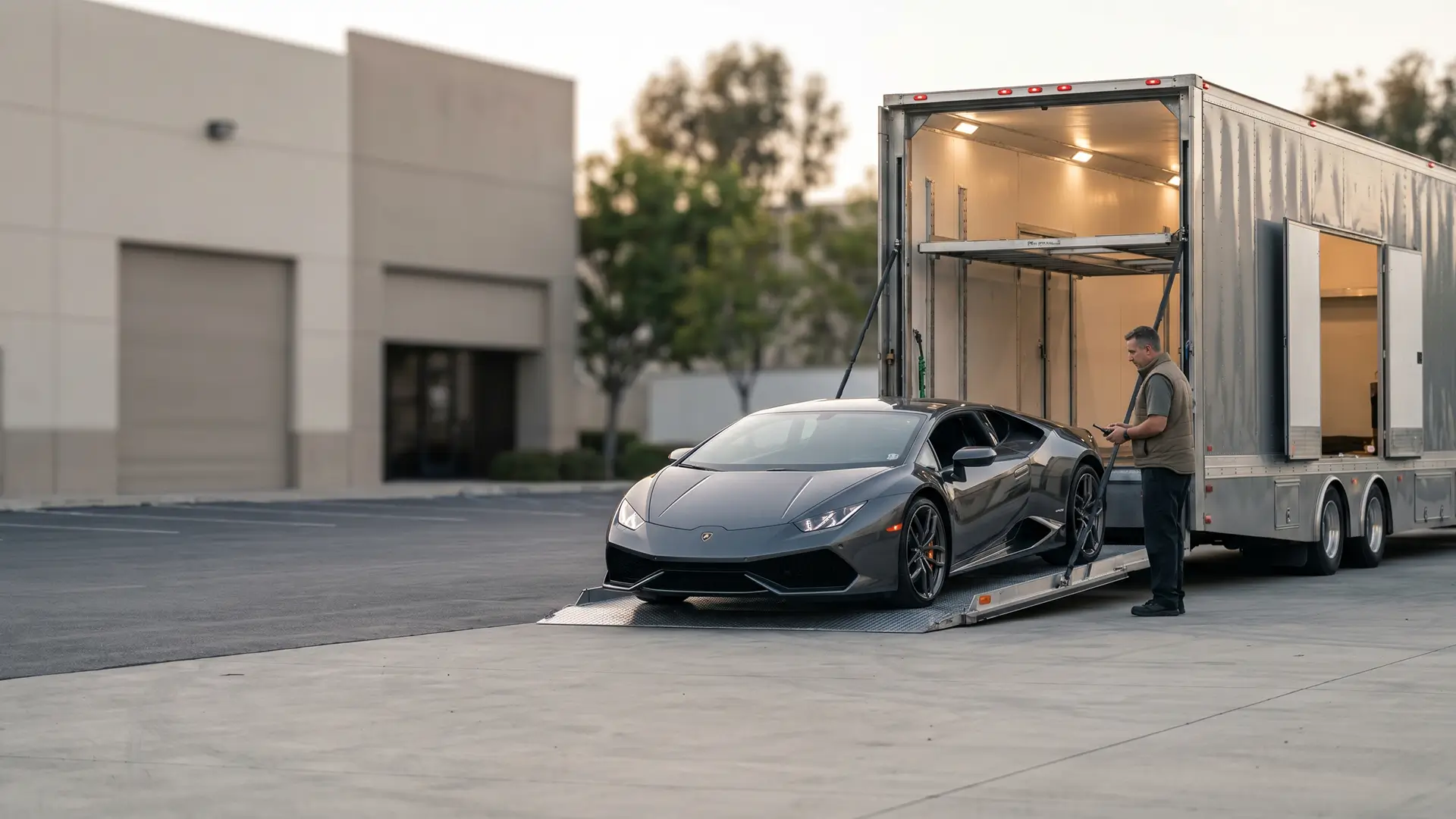
Rivalane arranges licensed, insured, door to door car shipping across Nebraska and to every other state. Tell us where the vehicle starts and where it needs to be, and we match it to a carrier already covering that lane.
I-80 crosses the whole state, so moves through Omaha, Lincoln, Grand Island and North Platte connect straight onto one of the busiest freight corridors in the country. Pickups further off the interstate, out toward the Sandhills or the panhandle, we plan with more lead time rather than more promises.
Get a Nebraska car shipping quote in about a minute.





5-Star Average Rating
Fully Insured
Door to Door Delivery
Nationwide Coverage
Vetted Carriers
Nebraska is a long state to cross under your own power. I-80 runs 430 miles from the Iowa line to Wyoming, and that is a full day at the wheel before you have even left the state. Most moves we handle are not inside Nebraska at all, so the real drive is far longer than that.
Driving it yourself is rarely cheaper once you count what the trip actually costs. Fuel and nights on the road, several days of your own time, and the mileage and wear you put on a car you are about to rely on somewhere new. Add winter, when a closure on I-80 leaves you waiting in a motel rather than rescheduling a pickup.
Handing the vehicle to a carrier already running the lane costs you none of that. You book the route, the car travels on a truck built to carry it, and you keep your time and your odometer for the move itself.

Cost and timing depend on your route, trailer type, vehicle size, and the time of year. The ranges below reflect typical market pricing and transit windows by distance, not a commitment on either. Your actual quote is based on real carrier availability on your specific route at the time of booking.
Nebraska is two shipping markets divided by longitude. Omaha and Lincoln sit in the eastern quarter, within roughly 200 miles of Des Moines, Kansas City and Sioux Falls, so regional runs off that side of the state price near the lower end of the national range. Head west and the picture changes. Grand Island, North Platte, Scottsbluff and the towns across the Sandhills sit a long way from any market of that size, so a carrier reaching them is building a long route rather than topping up a short one. I-80 crosses the entire state east to west, and almost everything moving through Nebraska runs on it.
Season weighs more than direction here. I-80 carries transcontinental freight both ways through the year, so a Nebraska lane rarely takes the outbound penalty that thinner states do. Winter is the real constraint, and it is not spread evenly. Nebraska DOT works the interstates continuously through a storm, but US and state highways get daytime plowing only, and rural links and spurs are cleared after both of those. A January pickup on I-80 is a different proposition from one forty miles off it, because the road that carrier depends on is third in the queue and worked in daylight. Leave more room in the window between December and March.
Vehicle size, whether the car runs, and trailer type all move the number, and enclosed transport runs roughly half again above open because far less enclosed capacity is on the road. The factor most within your control is lead time. Booking a week or two ahead puts your vehicle on a truck already running I-80 rather than one routed out to collect it, and that gap widens the further you sit from the corridor.
Get your Nebraska quoteFive steps from first enquiry to signed delivery report. Here is what each one involves and what we need from you at that point.





Share your pickup and delivery cities, and we outline the route right away.
You receive a clear quote with the cost factors explained in plain language, so you understand the price before you book.

Pick the pickup time that works for you. We match your schedule with a dependable carrier already running that route.
You also get a breakdown of how the transport will run, from confirmation through to delivery.

Take out personal items and make sure the keys are easy to access.
When the driver arrives, they complete a short condition check so everything is documented before loading.

The carrier loads the vehicle, secures it for the route, and sets off. You get short progress updates as it moves. Most of a Nebraska run is interstate miles, so the updates that matter most are the ones at either end, when the carrier is working local streets rather than I-80.

When the carrier reaches your chosen drop-off spot, they walk around the vehicle with you and record its condition against the report made at pickup. Once you have both signed off, the shipment is complete.

Most Nebraska moves come down to two choices, the trailer and the pickup point. These are the options we arrange, and what each one is suited to.
Most of Nebraska is not on I-80. We arrange pickups and deliveries in the Sandhills, the panhandle and the small towns off the interstate by building them into a route a carrier is already running, which takes more notice but keeps the price closer to a corridor run than a dedicated trip would.
The standard choice for most vehicles and the one with the widest carrier availability on Nebraska lanes. Your car travels on an open trailer alongside others, which is why it costs less than enclosed and why it is easier to schedule at short notice.
A covered trailer for classics, collector cars and anything you would rather not expose to weather or road debris. Fewer carriers run enclosed, so it costs more and benefits from extra lead time, particularly on routes away from the interstate.
Size and weight change how a carrier loads a trailer, so a full-size truck or a three-row SUV takes more space than a sedan and prices accordingly. Tell us the year, make and model at booking, along with a lift kit, roof rack or oversized tyres if the vehicle has them, and we match it to a trailer with room for it.
Collection and delivery at the addresses you give us, whether that is a home, a workplace or a dealership. Where a street is too narrow or too tight for a full trailer, the carrier arranges a nearby meeting point instead, which is common in older parts of Omaha and Lincoln.
A vehicle that will not start needs a carrier carrying a winch, and that is a smaller pool than standard open transport. Confirm at booking whether it rolls, steers and brakes, because those three things decide which equipment the job needs and what it costs.
Every shipper claims to be reliable. Here is what actually separates a well-run move from a risky one, and what to ask before you book anyone for a Nebraska route.
Ask whether the company can name a real Nebraska constraint before you raise it, such as how they reach an address in the Sandhills or the panhandle well off I-80, or what changes for a January pickup on a road the state plows in daylight hours only.
Ask whether the price you are quoted is based on your actual route and vehicle, or a generic distance estimate that gets revised once a carrier is assigned.
Ask what happens if no carrier is available on your exact date. That matters most between December and March, when a storm can shut the corridor and the state highways feeding it are cleared only after the interstate. A shipper working from an existing carrier network can usually offer options faster than one starting from scratch.
Get your Nebraska quoteDemand into and out of Nebraska comes from a few clear directions. Here is who ships most often.
.svg)
A good share of the demand we see into Nebraska comes from buyers who purchased a vehicle sight unseen from somewhere else in the country. We arrange pickup from the seller or the dealership and deliver it to your Nebraska address, so nobody has to fly out and drive it back. One thing is worth knowing before you buy. Nebraska requires a newly purchased vehicle to be registered, with sales tax paid, within thirty days of the purchase date, and that clock starts when you buy rather than when the car arrives, so transit time comes out of it. Book transport with enough margin that the paperwork is not the thing running late.
Estimate your shipment →.svg)
A vehicle you already own still has to be titled and registered here, and the sequence is worth knowing before you book. The clock runs from arriving in the state rather than from establishing residency, so a car that lands ahead of you is not a problem. Registration happens in the county where the vehicle is kept most of the time. Most arrivals we handle head for Omaha, Lincoln and Bellevue, and addresses out toward the Sandhills or the panhandle are worth booking earlier because carriers pass less often once you leave I-80.
Vehicle transport services →
A vehicle that does not start needs a carrier with a winch and the right loading setup, and that is a smaller pool than standard open transport. It thins further away from the corridor, so a non-running pickup in the Sandhills or the panhandle needs more lead time than the same vehicle in Omaha. Tell us the condition up front, including whether it rolls, steers and brakes, and we match it to a carrier equipped for it rather than discovering the problem at pickup. The same applies to a project car coming home from a workshop or a long-stored vehicle leaving a garage.
Quote a non-running vehicle →
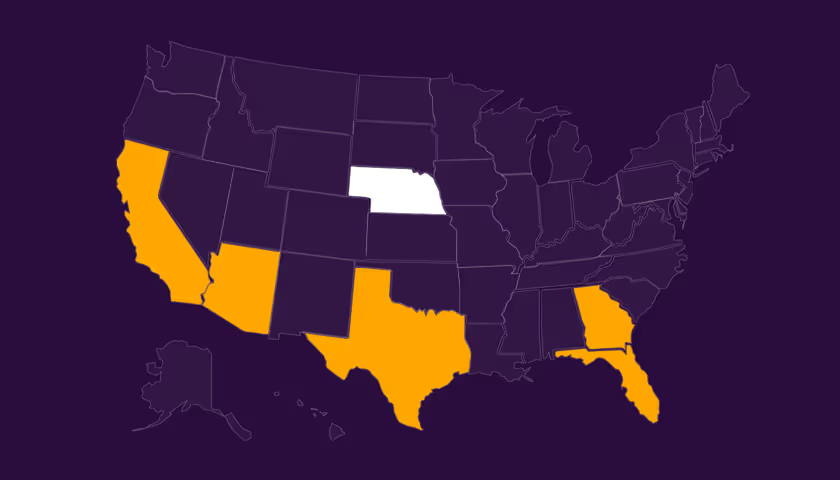
Work, retirement and family moves take vehicles in and out of Nebraska in every direction, and California is far and away the lane we are asked about most, in both directions. I-80 runs the whole way, which is why these moves schedule better than the mileage alone suggests. We arrange pickup from Omaha, Lincoln, Grand Island, North Platte and the towns between them, then hand the vehicle to a carrier already working that direction. Texas, Florida and the East Coast come up regularly as well. The more notice you can give on a destination and a workable date, the more options open up. Tell us where the vehicle is going and we will build the pickup around it.
Estimate a long-distance move →Looking to ship your car to another state or across the country? Rivalane ships to all 50 states. Select a state to see how it prices, what its corridors are, and what it asks of an arriving vehicle.
Nebraska's population sits mostly along its eastern edge and the I-80 corridor, so the city list below runs from the Omaha metro on the Iowa line out through Lincoln, Grand Island and North Platte to the panhandle. Coverage reaches every ZIP in the state, though the further a delivery sits from the interstate the more the pickup window matters.
.png)