There is no road connection between the mainland and Puerto Rico, so every vehicle makes the trip by sea. Rivalane transports your car from your address to the departure port, where an ocean carrier takes it on to San Juan. Here is how the journey works, what shapes the cost, and what Puerto Rico asks of you once the car lands.
I needed to ship a large SUV (private car) from Boston to Charlotte, and found Rivalane through online search...
★★★★★
Sveta Fomina
Anthony was amazing to work with! He made my transportation experience smooth...
★★★★★
Diego Sacramento
I spoke with a lot of companies before reaching out to Rivalane. All the other companies I didn’t feel confident with...
★★★★★
Gappsi Giuseppe Abbrancati
I was recommended Rivalane by a friend who had a great experience transporting their car, and I’m really glad I chose them to...
★★★★★
Alexandra Negrea
They took care of my favorite little car, transporting it from South Carolina to Long Island, New York...
★★★★★
Mai Emma
I like how they have the price upfront, and customer service is top tier. I hope more people would know and trust..
★★★★★
Kerri-Ann Swaby
Jose C. was the most conscientious, polite, patient, respectable, amicable, punctual & vivacious delivery driver...
★★★★★
Olena Horoshko
Rivalane is the best. My car was shipped from Florida to Chicago. it showed up a day early and in great condition...
5-Star Average Rating
Licensed & Insured Carriers
Mainland Port Drop-Off
Nationwide Coverage
Door to Port Transport
Rivalane handles the part of this move that happens on the mainland. We match your vehicle with a licensed, insured carrier and transport it to the departure port for the date you need it there. The ocean crossing belongs to the shipping line you book with, and the excise tax belongs to Hacienda. Working out which company owns which step is the most useful thing you can do before booking anything, because a car that misses its sailing waits for the next one.
Shipping from Puerto Rico
Vehicles leave the island through the Port of San Juan and land at Jacksonville, or at Eddystone in Pennsylvania if the Northeast is closer to where the car is going.
The paperwork runs on short clocks, with the police pre-inspection certificate valid for five days and the CESCO no-fines certificates for three, so they are gathered close to the sailing rather than well ahead of it.
Vehicles are turned away at the terminal for cracked glass, for not running, and for personal items left inside, so those are worth checking before the certificates are pulled.
Once the vessel docks on the mainland, Rivalane collects the car at the port and runs it to your address.
Rivalane collects at your address anywhere on the mainland and transports the vehicle to the departure port you have booked with the shipping line.
Jacksonville handles most of this traffic, with Crowley, TOTE Maritime and Trailer Bridge all sailing from there, while Eddystone in Pennsylvania is the shorter run from the Northeast.
Sailings run to a fixed schedule rather than on demand, so the drop-off date is set by the vessel and the road leg is planned backwards from it.
The vehicle arrives at San Juan, where the excise tax Hacienda assesses is settled before the port will release it.
Enter your pickup ZIP code and the ZIP of the departure port, and you get a price for the road leg. That is the part Rivalane carries. Ocean freight is quoted separately by the shipping line, so ask for both numbers before you settle on a budget.
2. Book Your Sailing
Book space with one of the ocean carriers running the lane. Crowley, TOTE Maritime and Trailer Bridge all sail from Jacksonville, and Crowley also serves Eddystone in Pennsylvania. Departures run to a fixed schedule, so the sailing date sets the timing for everything else rather than the other way round.
3. Prepare Your Vehicle
Clean the car inside and out, take dated photos, and remove every personal item, since carriers refuse vehicles with belongings inside. Fuel needs to be at a quarter tank or less. Have your title, registration and any lienholder authorisation in hand, and confirm the shipping line accepts your vehicle type before the truck is booked.
4. Pickup and Port Drop-Off
A carrier matched to your route collects the vehicle and runs it to the terminal, inspecting and documenting its condition at pickup. Rivalane's part of the move ends at the terminal gate, where the shipping line takes over and issues the bill of lading.
5. Crossing and Release
The vessel carries the car to San Juan. Once it lands you pay the excise tax Hacienda assesses on the vehicle, and the port releases it to you against the bill of lading. Registering with DTOP and CESCO is a separate step you handle on the island.
What We Offer In Puerto Rico
Puerto Rico Car Shipping Services
Rivalane's part of a Puerto Rico shipment is the mainland leg, from your address to the departure port on the way out, and from the arrival port to your address on the way back. These are the options that apply to that part of the move.
Transport to the Departure Port
This is the service Rivalane provides on a Puerto Rico move. We collect the vehicle at your address anywhere on the mainland and deliver it to the terminal you have booked with the shipping line, most often Jacksonville, or Eddystone in Pennsylvania if you are closer to the Northeast. On the return direction we do the same in reverse, collecting at the arrival port and delivering to your door.
Open Carrier Transport
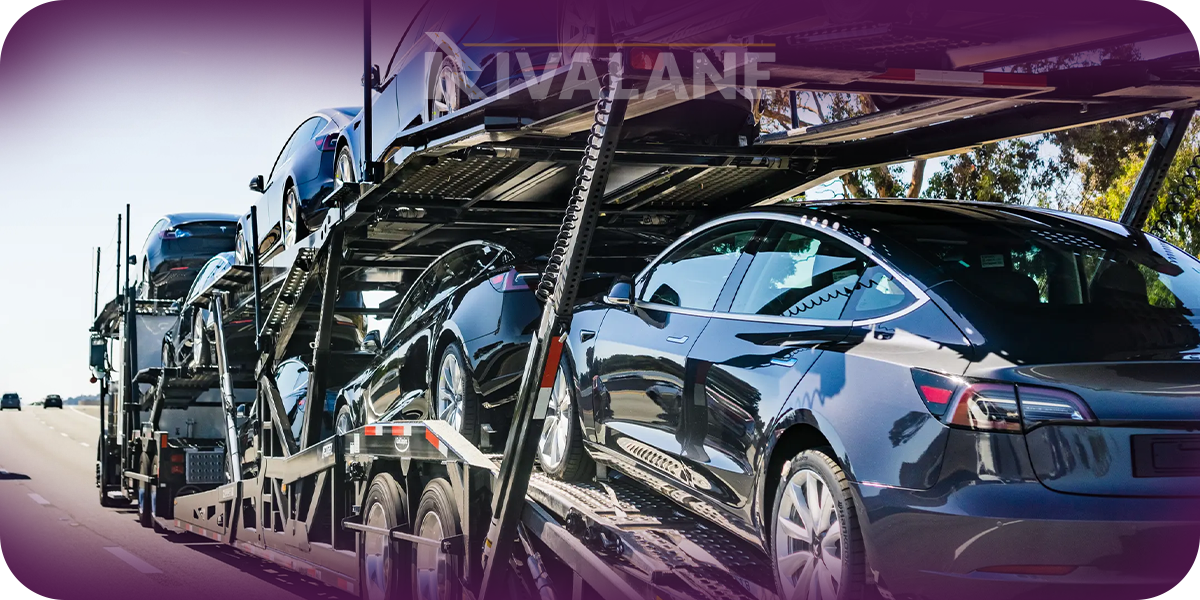
Open carriers handle most daily-use vehicles on the road leg, including sedans, SUVs and light trucks. Your car travels on an open trailer alongside others, which is why it costs less and why it is the easiest option to schedule at short notice. On the ocean leg the shipping line decides how the vehicle is stowed, so this choice applies to the mainland run rather than the crossing.
Enclosed Car Transport
Enclosed transport suits high-value, classic, restored and specialty vehicles on the road leg to the port. The car travels inside a covered trailer, away from weather and road debris. Enclosed space is scarcer than open, so allow more lead time, and book it against your sailing date rather than the other way round.
Expedited Transport to the Port
Sailings run to a fixed schedule, so a missed cut-off usually means waiting for the next departure. Expedited transport narrows the pickup window by matching your vehicle to the first suitable carrier covering the route rather than waiting for the best-priced one. Tell us your terminal cut-off early and we will say plainly whether it can be met.
Vehicle Types and Eligibility
The shipping line decides what sails, and its rules are stricter than a mainland road move. TOTE Maritime stopped accepting electric and plug-in hybrid vehicles on 1 August 2025. Vehicles that do not run, or that have cracked glass or body damage, are generally refused, and personal items must be out of the car. Confirm your vehicle with the ocean carrier first, then book the road leg around that answer.
Booking a Puerto Rico Shipment
How to Choose a Car Shipping Company for Puerto Rico
A Puerto Rico move involves at least two companies and one tax authority, and the gaps between them are where it goes wrong. Here is what to check before you book anyone, and what a well-run company raises before you have to ask.
What to Check
The Puerto Rico Angle
Who Covers Which Leg
Two different companies carry your car on this move, under two different liability regimes, and one quoted price can hide where the first ends and the second begins.
Ocean carriers publish their own liability limits. Crowley's terms cap cargo liability at $500 per unit under the US Carriage of Goods by Sea Act, with cargo insurance offered separately. The carrier moving the car on the mainland is covered under its own policy for the road leg only. Ask each company what its limit is on its own leg, and settle the ocean cargo insurance question before the car leaves.
What the Quote Includes
A quote that changes later usually means it never covered the whole journey in the first place.
A Puerto Rico move generates three separate bills: the inland transport to the port, the ocean freight, and the excise tax Hacienda charges once the car arrives. The tax is not a percentage of what you paid. Hacienda assesses its own value for the vehicle and applies a rising bracket that starts at a minimum of $637.50, so a company quoting a flat percentage is guessing. Ask which of the three a number actually covers.
Whether Your Vehicle Can Sail
Ocean carriers set their own acceptance rules, and a vehicle turned away at the terminal has already cost you the inland trip.
Acceptance rules belong to the shipping line and they change. TOTE Maritime stopped accepting electric and plug-in hybrid vehicles on 1 August 2025. Vehicles are also refused for cracked glass, for not running, and for personal items left inside, and they need to arrive with a quarter tank or less. Confirm eligibility with the ocean carrier before anyone books the road leg.
Who Covers Which Leg
Two different companies carry your car on this move, under two different liability regimes, and one quoted price can hide where the first ends and the second begins.
The Puerto Rico AngleOcean carriers publish their own liability limits. Crowley's terms cap cargo liability at $500 per unit under the US Carriage of Goods by Sea Act, with cargo insurance offered separately. The carrier moving the car on the mainland is covered under its own policy for the road leg only. Ask each company what its limit is on its own leg, and settle the ocean cargo insurance question before the car leaves.
What the Quote Includes
A quote that changes later usually means it never covered the whole journey in the first place.
The Puerto Rico AngleA Puerto Rico move generates three separate bills: the inland transport to the port, the ocean freight, and the excise tax Hacienda charges once the car arrives. The tax is not a percentage of what you paid. Hacienda assesses its own value for the vehicle and applies a rising bracket that starts at a minimum of $637.50, so a company quoting a flat percentage is guessing. Ask which of the three a number actually covers.
Whether Your Vehicle Can Sail
Ocean carriers set their own acceptance rules, and a vehicle turned away at the terminal has already cost you the inland trip.
The Puerto Rico AngleAcceptance rules belong to the shipping line and they change. TOTE Maritime stopped accepting electric and plug-in hybrid vehicles on 1 August 2025. Vehicles are also refused for cracked glass, for not running, and for personal items left inside, and they need to arrive with a quarter tank or less. Confirm eligibility with the ocean carrier before anyone books the road leg.
Questions Worth Asking Before You Book
Ask which company is carrying the car on each leg, and what each one's liability limit is on its own leg.
Ask whether the number you are quoted covers the inland transport only, or the ocean freight as well, and whether the excise tax has been estimated at all.
Ask what happens if the vehicle misses its sailing, since departures run on a fixed weekly schedule rather than on demand.
Every Puerto Rico shipment has a mainland end. If you also need to ship your car to another state, Rivalane covers all 50 states by road. Select any state below for more shipping details.
Vehicles bound for Puerto Rico leave the mainland through a small number of ports. Jacksonville handles most of this traffic, with Crowley, TOTE Maritime and Trailer Bridge all sailing from there, and Crowley also runs the lane from Eddystone in Pennsylvania, which is the shorter road leg if you are in the Northeast. Whichever you use, the vessel docks at San Juan. Ponce is a real deep-water port but it is not a routine vehicle gateway, so plan on collecting at San Juan and confirm the arrival port with your shipping line before anything else is booked. From Bayamon, Carolina or Caguas that is a short drive. From Ponce, Mayaguez or the south west it is a longer one, and worth factoring into the day you collect.
Two things happen before you drive away. The excise tax Hacienda assesses on the vehicle has to be settled before the port will release it, and registration is handled afterwards by DTOP and CESCO rather than at the terminal. Collection is not open ended either: Crowley gives non-commercial vehicles nine calendar days to collect once the Hacienda release form has been issued, weekends and holidays included. A few practical points catch people out. A mainland driver's licence is not a long term substitute for a Puerto Rico one. The island's toll roads run on an AutoExpreso stamp. And it is worth pulling any existing toll transponder out of the car before it ships, so you are not billed for journeys the vehicle made on a truck.
Official sources worth bookmarking: DTOP for vehicle registration and titling, CESCO for licences and vehicle records, Hacienda for the excise tax tables and the SURI estimator, and AutoExpreso for toll stamps. Rivalane transports the vehicle. Titling, registration and tax remain the owner's responsibility, so check current requirements with each agency before your car arrives.
Most popular Routes in Puerto Rico
Origin
Destination
Distance
Average Time
Average Cost
No items found.
Frequently Asked Questions
What do I need to ship a car from Puerto Rico to the mainland?
Can I ship an electric or hybrid vehicle to Puerto Rico?
How much is the Puerto Rico excise tax on a vehicle?
Do I need to pay customs duty on a car shipped to Puerto Rico?
How do you ship a car to Puerto Rico?
What is the cheapest way to ship a car to Puerto Rico?
What documents do I need to ship a car to Puerto Rico?
Does my car need an inspection in Puerto Rico?
How long does it take to ship a car to Puerto Rico?
How much does it cost to ship a car to Puerto Rico?















.png)


