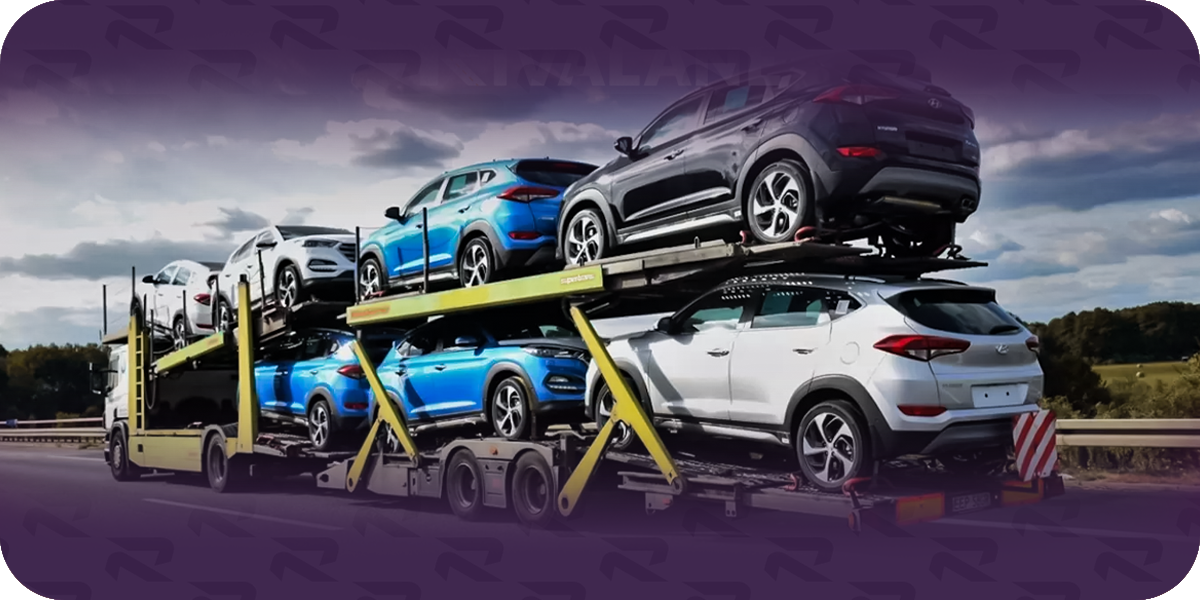
Rivalane arranges Alaska car shipping door to door, terminal to terminal, or a combination of the two. We collect from road-connected communities across Alaska, run the vehicle to the port, and collect it again in Washington for the leg to your address. The ocean crossing is yours to book if you prefer, or ours to arrange if you would rather not. Every shipment moves under the carrier's cargo insurance.
Want to know more about any service or pricing? Feel free to ask our support team.
★ ★ ★ ★ ★
Mark Nash
I needed to ship a large SUV (private car) from Boston to Charlotte, and found Rivalane through online search...
★★★★★
Sveta Fomina
Anthony was amazing to work with! He made my transportation experience smooth...
★★★★★
Diego Sacramento
I spoke with a lot of companies before reaching out to Rivalane. All the other companies I didn’t feel confident with...
★★★★★
Gappsi Giuseppe Abbrancati
I was recommended Rivalane by a friend who had a great experience transporting their car, and I’m really glad I chose them to...
★★★★★
Alexandra Negrea
They took care of my favorite little car, transporting it from South Carolina to Long Island, New York...
★★★★★
Mai Emma
I like how they have the price upfront, and customer service is top tier. I hope more people would know and trust..
★★★★★
Kerri-Ann Swaby
Jose C. was the most conscientious, polite, patient, respectable, amicable, punctual & vivacious delivery driver...
★★★★★
Olena Horoshko
Rivalane is the best. My car was shipped from Florida to Chicago. it showed up a day early and in great condition...
5-Star Average Rating
Fully Insured
Top Rated Service
Nationwide Coverage
Vetted Carriers
Rivalane is a broker, not a trucking company, and on an Alaska move that distinction decides who is answerable for what. An Alaska shipment runs in three legs: the road leg in Alaska, the ocean crossing, and the road leg in Washington. We arrange the road legs at both ends, and we can arrange the crossing too, though many customers book that directly with the shipping line and we are happy either way. We check that every road carrier we assign holds active operating authority and insurance before your vehicle is collected. Every shipment moves under the carrier's cargo insurance.
Shipping from Alaska
We collect at the door across Alaska's road-connected communities, from Anchorage and the Mat-Su valley to Fairbanks, the Kenai Peninsula and Valdez, and run the vehicle to the port.
Once the vessel lands in Washington we collect again and carry on to your address, or you collect at the terminal yourself if you would rather stop there.
Every shipment moves under the carrier's cargo insurance, and we confirm the carrier details with you before collection.
Open and enclosed both run out of the port, and you choose the trailer type when you book rather than at the terminal.
Book the road leg against the sailing rather than the calendar, since the vessel schedule sets the day your car is available to collect.
We collect anywhere in the lower 48 and deliver to the departure port, Tacoma or Seattle depending on the line, then collect again in Alaska for the run to your address.
Delivery reaches the road-connected communities. Juneau, Ketchikan, Kodiak, Nome and the other off-road towns are terminal collections, since no road runs to them.
Carrier authority and cargo insurance are checked before your vehicle is collected, wherever it is coming from.
Confirm the shipping line will accept your vehicle before the road leg is booked, since a refusal at the terminal still costs you the run there.
Alaska allows ten days to register once you enter the state or take a job there, and that clock runs from your arrival rather than the car's, so the sailing date is worth planning around.
An Alaska move is built from three legs: a road leg in Alaska, the ocean crossing, and a road leg in Washington. You can take all three as a full door to door service, take the crossing alone and handle both ends yourself, or mix the two. Rivalane arranges the road legs in every case, and the crossing is yours to book or ours, whichever suits you. Working out which legs you want is the first decision, because everything else follows from it.
Decide how much of the journey you want us to handle. Door to door covers all three legs, from your address in Alaska to your address in Washington or the reverse. Terminal to terminal means you deliver to the Alaska port and collect at the Washington port, and we arrange the crossing between them. Many customers take a hybrid, using us for one road leg and handling the other themselves. Tell us the two addresses and which legs you want, and the quote is built from that.
2. Book the Crossing
Space has to be booked with an ocean carrier, and you can do that yourself or leave it to us. Matson sails from Tacoma to Anchorage, Kodiak and Dutch Harbor. Alaska Marine Lines sails from Seattle, twice weekly to Southeast Alaska, weekly to Central Alaska, and seasonally to the Western and Arctic communities. Departures run to a fixed schedule, so the sailing date sets the timing for both road legs rather than the other way round.
3. Prepare Your Vehicle
Clean the car inside and out, take dated photos, and check what the shipping line will let you leave in it. Fuel needs to sit between an eighth and a quarter of a tank. Fire extinguishers and any ignition interlock device have to come out, and Matson is not currently accepting electric or plug-in hybrid vehicles, so confirm the line takes your vehicle type before the truck is booked.
4. Collection and Port Drop-Off
If you have taken the door leg, a carrier matched to your route collects the vehicle and runs it to the terminal, inspecting and documenting its condition at pickup. On the Alaska side that means a local carrier working the road system, from Anchorage and the Mat-Su valley up to Fairbanks or down the Kenai Peninsula. If you are going terminal to terminal, you deliver the vehicle to the port yourself and the shipping line takes it from the gate.
5. Crossing and Final Delivery
The vessel makes the crossing and the port releases the vehicle against the bill of lading. If you have taken the far-end door leg, a carrier collects it from the terminal and runs it to your address, with a second inspection at delivery. If not, you collect at the terminal yourself. On an inbound move the same sequence runs in reverse, ending at your address in Alaska. Registering with the Alaska DMV is a separate step you handle, and the ten day clock runs from when you arrive or take a job rather than from when the car does.
What We Offer In Alaska
Our Services for Alaska Car Shipping
An Alaska shipment is built from three legs, and you choose how many of them we handle. These are the options that apply, on the road legs at either end and on the crossing between them.
Door to Door or Terminal to Terminal
Door to door covers all three legs. We collect at your address in a road-connected Alaska community, run the vehicle to the port, and collect it again in Washington for the leg to your door, or the same sequence in reverse. Terminal to terminal covers the crossing alone: you deliver to the Alaska port and collect at the Washington port. Most people take one of the two hybrids, using us for one road leg and handling the other themselves. All four work in both directions.
Open Transport
Open carriers handle most daily-use vehicles on the road leg, including sedans, SUVs and light trucks. Your car travels on an open trailer alongside others, which is why it costs less and why it is the easiest option to schedule at short notice. On the ocean leg the shipping line decides how the vehicle is stowed, so this choice applies to the mainland run rather than the crossing.
Enclosed Transport
Enclosed transport suits high-value, classic, restored and specialty vehicles on the road leg to the port. The car travels inside a covered trailer, away from weather and road debris. Enclosed space is scarcer than open, so allow more lead time, and book it against your sailing date rather than the other way round.
Expedited Transport
Sailings run to a fixed schedule, so a missed cut-off usually means waiting for the next departure. Expedited transport narrows the pickup window by matching your vehicle to the first suitable carrier covering the route rather than waiting for the best-priced one. Tell us your terminal cut-off early and we will say plainly whether it can be met.
Vehicle Types and Eligibility
The shipping line decides what sails, and its rules are stricter than a mainland road move. Neither Matson nor Alaska Marine Lines currently carries electric or plug-in hybrid vehicles. Fuel must sit between an eighth and a quarter of a tank, fire extinguishers and ignition interlock devices are refused, and auxiliary propane tanks must be emptied and certified before delivery. Confirm your vehicle with the ocean carrier first, then book the road leg around that answer.
Booking an Alaska Shipment
How to Choose a Car Shipping Company for Alaska
Getting a car to Alaska means at least two companies carry it and a set of state deadlines is waiting when it lands. Most of what goes wrong happens in the gaps between them. Here is what to check before you book anyone, and what a well-run company raises before you have to ask.
What to Check
The Alaska Angle
Who Covers Which Leg
Two different companies carry your car on this move, under two different liability regimes, and one quoted price can hide where the first ends and the second begins.
An Alaska move runs in three legs: the road leg in Alaska, the ocean crossing, and the road leg in Washington. Rivalane arranges the two road legs, and the crossing is either yours to book with the shipping line or ours to arrange for you. Each leg sits under a different liability regime. Ocean carriers publish their own cargo limits, and a published limit is a cap rather than insurance, while road carriers are covered under their own policies. Matson sails Tacoma to Anchorage, Kodiak and Dutch Harbor, and Alaska Marine Lines sails from Seattle. Ask what applies on each leg rather than assuming one number covers the journey.
What the Quote Includes
A quote that changes later usually means it never covered the whole journey in the first place.
An Alaska move is charged by the legs it uses: the Alaska road leg, the ocean freight, the Washington road leg, and then what the DMV collects when the car is registered. Alaska has no state sales tax, but the DMV collects a Motor Vehicle Registration Tax on behalf of those boroughs and municipalities that have elected it, and the rate depends on where you register rather than on what you paid. Ask which legs a quoted number actually covers, and whether the crossing is inside it or not.
Whether Your Vehicle Can Sail
Ocean carriers set their own acceptance rules, and a vehicle turned away at the terminal has already cost you the inland trip.
Acceptance rules belong to the shipping line and they change. Matson has suspended acceptance of new and used electric and plug-in hybrid vehicles, and Alaska Marine Lines does not carry them either, so the restriction covers both main lines on this lane. Fuel has to sit between an eighth and a quarter of a tank, ignition interlock devices are refused outright, and fire extinguishers, roof carriers, bike racks and spare batteries all have to come out first. Whoever books the crossing needs to clear the vehicle with the line first. If we are booking it, we make that check for you.
Who Covers Which Leg
Two different companies carry your car on this move, under two different liability regimes, and one quoted price can hide where the first ends and the second begins.
The Alaska AngleAn Alaska move runs in three legs: the road leg in Alaska, the ocean crossing, and the road leg in Washington. Rivalane arranges the two road legs, and the crossing is either yours to book with the shipping line or ours to arrange for you. Each leg sits under a different liability regime. Ocean carriers publish their own cargo limits, and a published limit is a cap rather than insurance, while road carriers are covered under their own policies. Matson sails Tacoma to Anchorage, Kodiak and Dutch Harbor, and Alaska Marine Lines sails from Seattle. Ask what applies on each leg rather than assuming one number covers the journey.
What the Quote Includes
A quote that changes later usually means it never covered the whole journey in the first place.
The Alaska AngleAn Alaska move is charged by the legs it uses: the Alaska road leg, the ocean freight, the Washington road leg, and then what the DMV collects when the car is registered. Alaska has no state sales tax, but the DMV collects a Motor Vehicle Registration Tax on behalf of those boroughs and municipalities that have elected it, and the rate depends on where you register rather than on what you paid. Ask which legs a quoted number actually covers, and whether the crossing is inside it or not.
Whether Your Vehicle Can Sail
Ocean carriers set their own acceptance rules, and a vehicle turned away at the terminal has already cost you the inland trip.
The Alaska AngleAcceptance rules belong to the shipping line and they change. Matson has suspended acceptance of new and used electric and plug-in hybrid vehicles, and Alaska Marine Lines does not carry them either, so the restriction covers both main lines on this lane. Fuel has to sit between an eighth and a quarter of a tank, ignition interlock devices are refused outright, and fire extinguishers, roof carriers, bike racks and spare batteries all have to come out first. Whoever books the crossing needs to clear the vehicle with the line first. If we are booking it, we make that check for you.
Questions Worth Asking Before You Book
Ask which company is carrying the car on each leg, and what each one's liability limit is on its own leg.
Ask whether the number you are quoted covers the inland transport only, or the ocean freight as well, and whether the borough registration tax has been worked out at all.
Ask whether the shipping line will accept your vehicle as it stands, since a car turned away at the terminal has already cost you the run to the port.
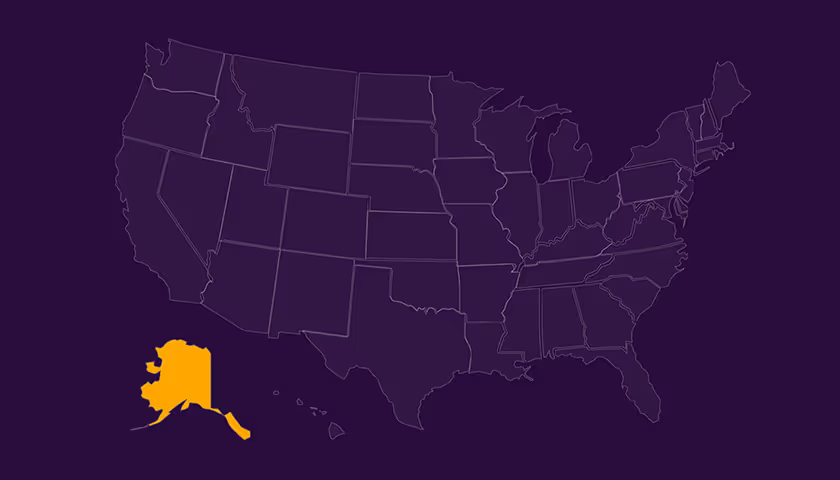
Looking to ship your car to another state or across the country? Rivalane ships between all 50 states, and runs the mainland leg to the departure port when Alaska is the destination. Select a state to see what shipping to or from it involves.
Alaska's road network reaches only part of the state, and that shapes how a car gets to any given address. Anchorage, the Mat-Su valley towns of Wasilla and Palmer, Fairbanks and North Pole, and the Kenai Peninsula communities of Kenai, Soldotna, Homer and Seward all connect by road, along with Valdez, so we can collect and deliver at the door. Juneau, Sitka, Ketchikan, Wrangell, Kodiak, Unalaska, Nome, Kotzebue, Bethel and Dillingham have no road link to the rest of the state, so those moves finish at the terminal and the onward leg is arranged by barge. The cities below show the ZIP codes each one covers.
Anchorage
Fairbanks
Juneau
Sitka
Ketchikan
Wasilla
Kenai
Kodiak
Bethel
Palmer
Homer
Valdez
Unalaska
Kotzebue
Soldotna
Nome
Seward
Wrangell
Dillingham
North Pole
Most popular Routes in Alaska
Origin
Destination
Distance
Average Time
Average Cost
No items found.
Frequently Asked Questions
What does Rivalane handle on an Alaska car shipment?
How much does it cost to ship a car to Alaska?
How long does it take to ship a car to Alaska?
What is the cheapest way to ship a car to Alaska?
Which port does my car leave from, and where does it land?
Can you ship an electric or plug-in hybrid vehicle to Alaska?
What paperwork do I need to ship a car to Alaska?
What types of vehicles can be shipped to Alaska?
How long do I have to register my car in Alaska?
Can I use studded tyres when my car arrives in Alaska?
















.png)