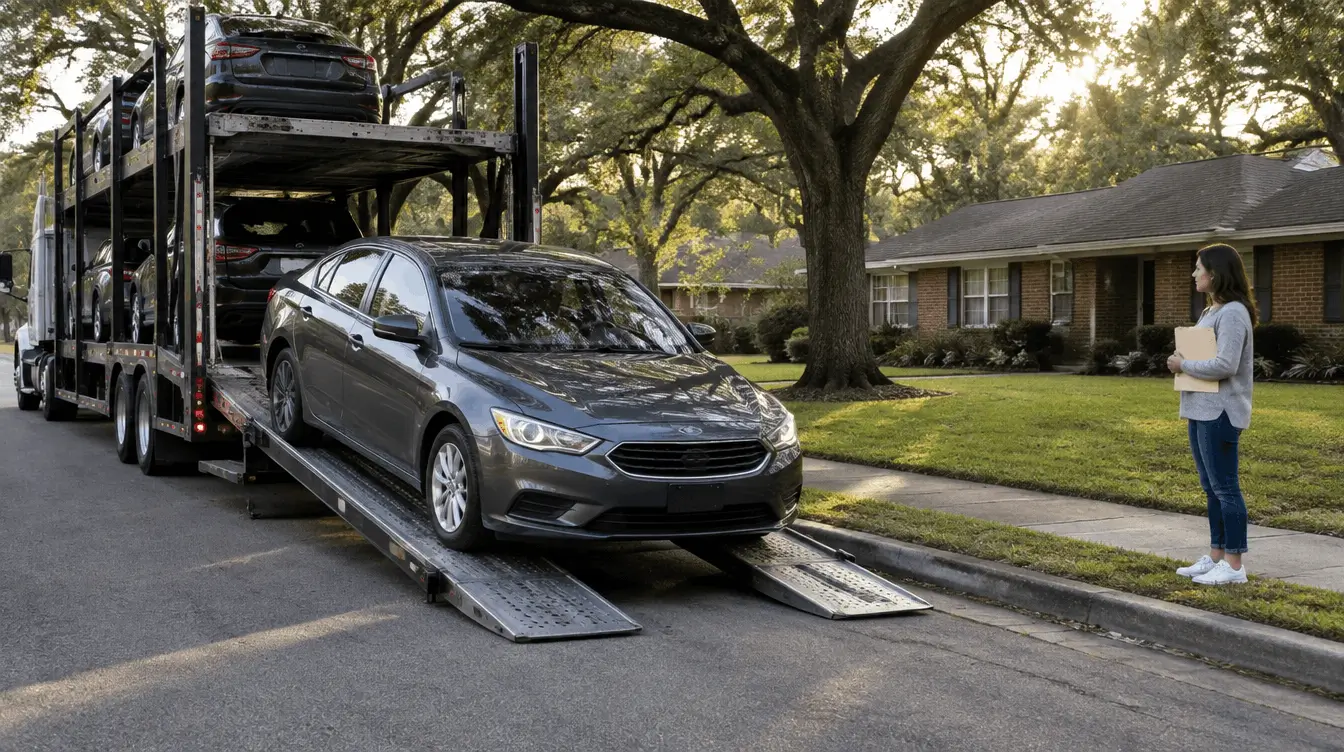
Mississippi car shipping with Rivalane starts with the route rather than a generic rate. You tell us where the vehicle is now and where it needs to be, and we match it to a licensed, insured carrier already working that direction instead of sending one out to collect it.
Pickups run from Jackson, the Gulf Coast at Gulfport and Biloxi, Hattiesburg, Meridian, Tupelo and Southaven on the Memphis line, along with the towns well off I-55 and I-20. Tell us the two addresses and your dates, and we will tell you what the route actually looks like before you book.





5-Star Average Rating
Fully Insured
Top Rated Service
Nationwide Coverage
Licensed, Vetted Carriers
Almost no auto transport carriers are based in Mississippi. The trucks that move vehicles here belong to routes that start and end somewhere else, so the question that decides your move is not what the rate is. It is whether somebody is already going your way in the window you need. When they are, your car joins a run that was happening anyway. When they are not, a carrier has to be pulled off its route to collect it, and that shows up as a longer wait more often than as a bigger number. Matching your vehicle to a route that already fits is the work that happens before you ever see a quote, and in a state with no freight hub of its own it carries more weight than the rate comparison most people start with. Two things make it easier from your side. Give us the exact pickup and delivery addresses rather than the nearest city, and tell us how much room you have in your dates. With both, we can tell you what is realistic on your lane instead of quoting you a state average.

Cost and timing depend on your route, trailer type, vehicle size, and the time of year. The ranges below reflect typical market pricing and transit windows by distance, not a commitment on either. Your actual quote is based on real carrier availability on your specific route at the time of booking.
Mississippi prices lower than its size and population would suggest, and the reason sits outside its own borders. The state has no large metro of its own, but it is ringed by them. Memphis sits directly on the state line above Southaven, New Orleans is a short run from the Gulf Coast, and Mobile, Birmingham and Baton Rouge all fall within a few hours of the state. Carriers serving those markets cross Mississippi constantly on I-55 and I-20 rather than making a dedicated trip for it, so short lanes here fill from freight that is already moving. Most states that price at this level do so because of their own density. Mississippi borrows it from the neighbours.
Where the vehicle sits relative to those corridors matters more than the mileage on its own. I-55 runs the length of the state through Jackson, I-20 crosses it east to west, and I-59 cuts southeast toward the coast, so an address near one of them can be reached without a carrier leaving its route. Pickups out in the Delta, in the pine belt, or well off the interstate need a truck to come and collect them, and that shows up in the pickup window as much as the price. Vehicle size, whether the car runs, and open against enclosed all move the figure as well. Enclosed runs roughly half again above open, because there is far less of it on the road.
The factor most within your control is notice. Booking a week or two out puts your vehicle on a truck already running I-55 or I-20 rather than one routed out to collect it, and that gap widens the further you sit from either road. Give the window more room if the pickup is rural, if you want enclosed, or if your dates are fixed rather than flexible.
Get your Mississippi quoteThe sequence is the same whether the vehicle is leaving Mississippi or arriving in it. Five stages run from the first quote to the condition check at the door, and the two that need the most from you are the first two.





Send the pickup and delivery addresses, the year, make and model, whether the vehicle runs, and the dates you can work with. Exact addresses matter more than the nearest city here, because both the price and the schedule depend on how easily a truck can reach the door.

We match the vehicle to a carrier already working your route, then confirm a pickup window rather than a single fixed hour. You get a point of contact once the carrier is assigned, and the window is agreed with you before the vehicle is collected.

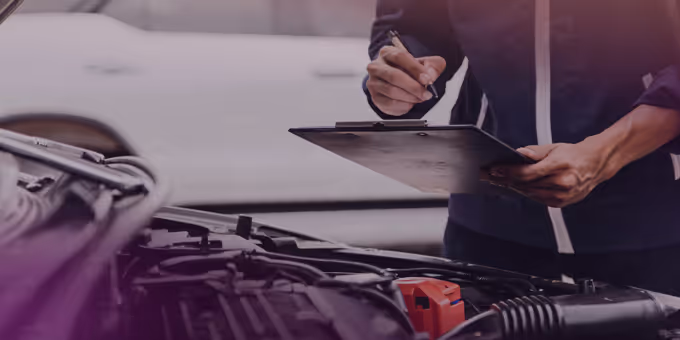
Clear personal items out, leave roughly a quarter tank of fuel, and have a set of keys ready. Note any existing damage so it is easy to compare on arrival, and tell us in advance if the vehicle sits low, has been modified, or will not start, since that changes which carrier can take it.
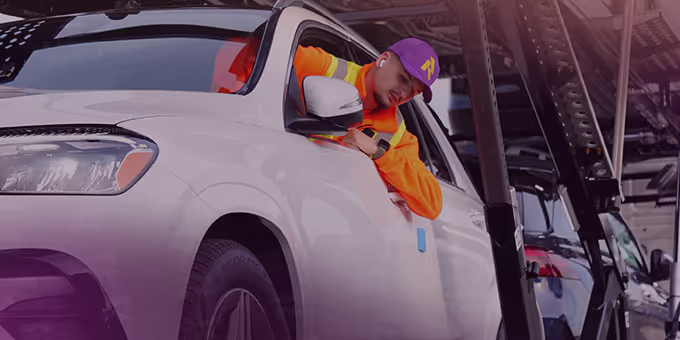
Once the condition report is signed, the vehicle is secured on the trailer and joins the carrier's route. Longer runs out of Mississippi usually collect other vehicles along the way, which is normal and does not change your delivery arrangements. You get updates while it is moving.
At the delivery address you walk the vehicle again against the report taken at pickup and note anything that has changed before you sign. Do that while the driver is still there, in daylight if you can arrange it. If you cannot be present, name someone in advance who can receive it for you.

These are the choices that change what you pay and how the move is scheduled. All of them run on the same nationwide carrier network, into and out of every part of the state.
Pickup and delivery run across the whole state, not only the towns sitting on I-55 and I-20. That covers Greenville out in the Delta, Oxford and Starkville in the north, Meridian in the east, Vicksburg on the river, and Pascagoula along the coast. An address away from the interstate needs a wider pickup window rather than a different service.
Most vehicles moving into or out of Mississippi travel this way. Your car shares a trailer with others on a route the carrier is already running, which is why it costs less and has the widest availability on the state's lanes. Read more about open auto transport.
An enclosed trailer keeps the vehicle out of the weather and away from road debris, which matters for classic, modified, low-clearance and high-value cars. There is far less enclosed equipment on the road, so it costs more and benefits from extra notice. Read more about enclosed auto transport.
A vehicle that will not start needs a carrier with a winch and the right loading setup, which is a smaller pool than standard open transport. Tell us whether it rolls, steers and brakes when you ask for a quote so it is matched correctly from the start. See all vehicle transport services.
Collection and delivery happen at the addresses you give us rather than at a terminal, whether that is a home, a workplace, a dealership or a storage yard at either end of the move. Read more about door to door transport.
Demand into and out of Mississippi comes from a few clear directions. Here is who ships most often.
.svg)
Much of the inbound demand we handle comes from people who bought a vehicle elsewhere and would rather have it moved than fly out and drive it back. We collect from the seller or the dealership and deliver to your Mississippi address. Two of the state's own rules are worth knowing before you fix your dates. A vehicle bought outside the county where you live has to reach your home or place of business within 48 hours, and the registration clock then runs 30 business days from the purchase date rather than 30 calendar days. Both come from the Department of Revenue, which issues the title, while the tag itself comes from your county Tax Collector.
Estimate your shipment →.svg)
A vehicle you already own still has to be titled and registered once you settle here, and the useful part is how little Mississippi asks of the vehicle itself. There is no safety inspection, the state repealed that requirement in 2015, and there has never been an emissions program anywhere in Mississippi. What matters instead is the clock. New residents have 30 days from moving to register, as long as the car still carries a valid plate from the state you left. The title comes from the Department of Revenue and the tag from the Tax Collector in the county where the vehicle is parked overnight, so it is two stops rather than one. Once the car arrives, our guide on how to register your car in Mississippi covers the tax collector visit, the paperwork and what goes into the tag cost.
Vehicle transport services →
A vehicle that does not start needs a carrier with a winch and the right loading setup, and that is a smaller pool than standard open transport. Tell us the condition up front, including whether it rolls, steers and brakes, and we match it to a carrier equipped for it rather than discovering the problem at pickup. The same applies to a project car coming home from a workshop or a long-stored vehicle leaving a garage.
Quote a non-running vehicle →
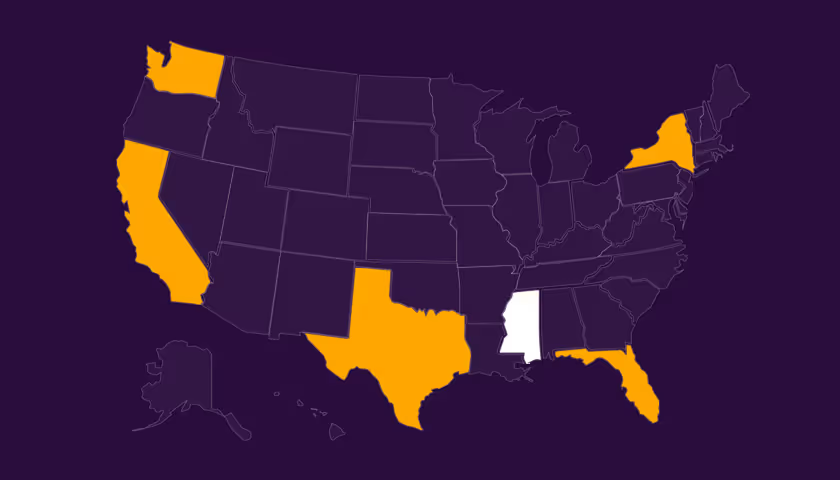
The busiest long-distance lane on this page runs between Mississippi and New York, in both directions, and it is asked about more often than every other route combined. Texas, California and Florida follow it. We arrange pickup from Jackson, the Gulf Coast, Hattiesburg or wherever the vehicle actually sits, then match it to a carrier already working that direction. Long lanes fill on their own schedule rather than yours, so the more notice you can give on a destination and a workable date, the more options stay open on both.
Estimate a long-distance move →Rivalane arranges car shipping between Mississippi and every other state on the same carrier network. If you want the cost side first, here is what it costs to ship a car cross country. Otherwise pick a state below to see what that route looks like from Mississippi.
Mississippi's population sits in clusters rather than around one centre, and two of them shape how pickups get scheduled. The DeSoto County towns in the north, Southaven, Horn Lake and Olive Branch, sit inside the Memphis metro and are reached by carriers already working that market. Around the capital, the ring of Madison, Ridgeland, Brandon, Pearl and Clinton is close enough to Jackson that a carrier reaching one can usually reach the others on the same run. The coast is a third cluster of its own, running from Gulfport and Biloxi east to Pascagoula.