Open and enclosed transport to and from anywhere in New Hampshire, from the I-93 corridor and the Seacoast out to the small towns up north. Share your pickup and delivery points and get a quote built on your actual route rather than a flat statewide rate.





5-Star Average Rating
Fully Insured
Door to Door Service
Nationwide Coverage
Vetted Carriers
New Hampshire sits in the corner of the country, and that shows the moment you think about driving a car out of it yourself. A move to Texas or Florida means crossing most of the eastern seaboard before the trip properly begins, and a run to the West Coast is days of driving, fuel and overnight stops. Shipping turns all of that into a pickup date and a delivery address.
It keeps the miles off the car as well. A vehicle driven across the country arrives carrying the wear of the trip, and in winter it arrives having met whatever the route put in front of it. On a carrier it is loaded once, secured, and not driven again until it comes off at the other end.
Rivalane arranges the move with licensed, insured carriers and matches your vehicle to one already working your route. You get one point of contact from the quote through to delivery.

Cost and timing depend on your route, trailer type, vehicle size, and the time of year. The ranges below reflect typical market pricing and transit windows by distance, not a commitment on either. Your actual quote is based on real carrier availability on your specific route at the time of booking.
New Hampshire prices in two halves. The southern tier sits on I-93 and I-95 inside the Boston freight market, close enough that carriers working New England are already passing through, so a move in or out of Manchester, Nashua, Salem or Portsmouth joins a route rather than creating one. North of Concord the picture changes. I-89 carries traffic toward Vermont and Route 101 runs east to west, but above the Lakes Region the roads narrow, the towns thin out, and a carrier has to build a route to reach you. The same state can price near the bottom of the regional range at one end and well above it at the other.
Where you are inside New Hampshire matters more than how far the vehicle travels. Manchester, Nashua, Derry, Londonderry, Salem and the Seacoast around Portsmouth and Dover sit on or beside the interstates and price at the low end. Keene, Laconia, Berlin and the White Mountain towns take longer to reach and cost more to serve. Season counts as well. Each spring the Department of Transportation posts weight limits on sections of state highway, and towns post their own limits on local roads, which keeps a loaded carrier off some rural routes until the frost is out of the road base. A delivery address away from the corridors in March or April may need a meeting point on a road the truck can legally use.
Vehicle size, whether the car runs, and trailer type all move the number, and enclosed transport runs roughly forty percent above open because fewer vehicles fit on the trailer. The factor most within your control is lead time. Booking a week or two ahead puts your vehicle on a truck already running I-93 or I-95 rather than one routed out to collect it, and that gap widens sharply once your address sits north of the corridors.
Get your New Hampshire quoteWe handle your move from the first message through to the handoff, and tell you what your route actually involves at each stage. The steps below are the same whether the car is leaving Nashua or arriving in the North Country.





You provide the pickup and drop-off points, and we review the route right away.
Your quote is explained clearly so you understand the cost and what’s included before you book anything.

Choose the pickup window that fits your plans and we match your shipment to a carrier already running that direction. You also get an overview of how the move will work from booking through to delivery.

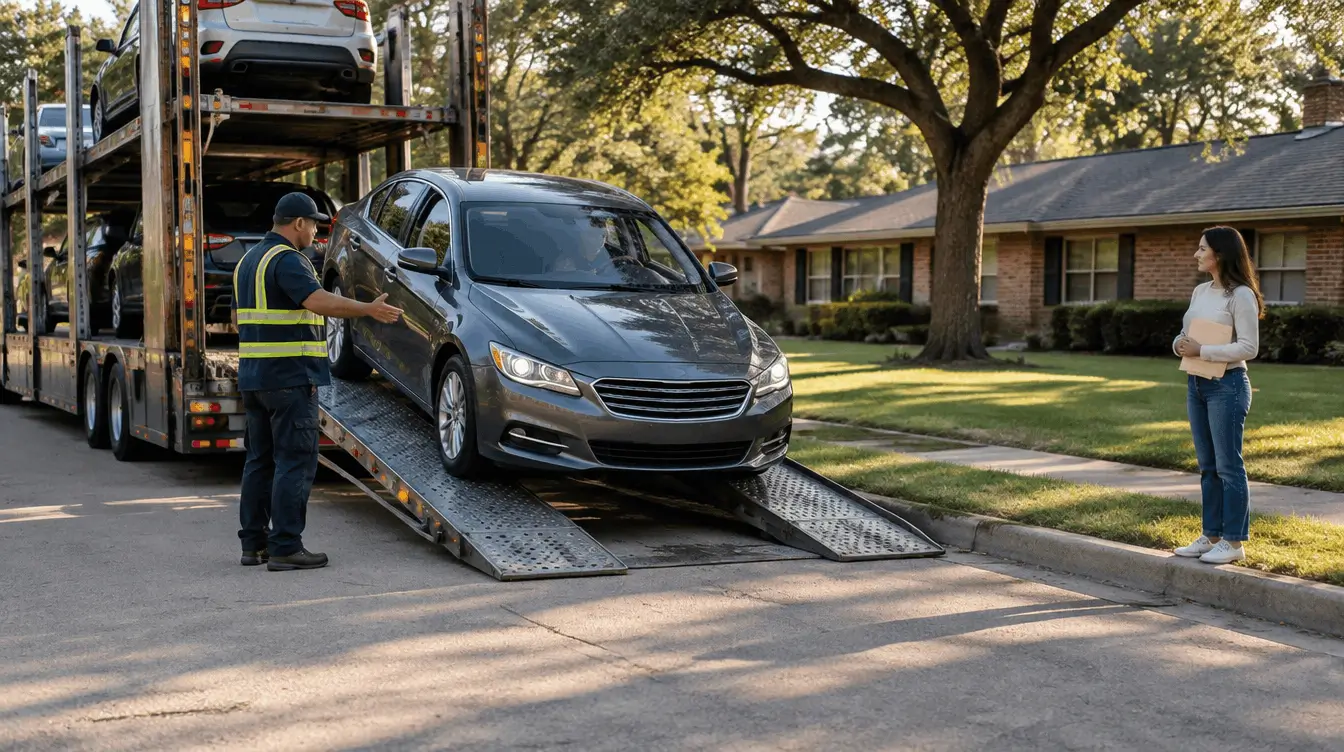
Take out personal items and keep the keys available. When the driver arrives, they complete a short inspection and document the vehicle’s current condition before loading it onto the trailer.

Your vehicle is on the road and you get updates as it moves, rather than having to chase for them. If weather or road conditions change the route, we tell you what that means for your delivery day instead of leaving you to find out at the door.

At delivery the driver walks around the vehicle with you and you check it together against the condition recorded at pickup. Once you are both satisfied and the paperwork is signed, the shipment is complete.

Most New Hampshire moves come down to a few choices: how the car travels, how much protection it needs, and where it gets collected and dropped off. Here is what you can pick from.
The standard choice, and the one most vehicles travel on. Your car rides on an open trailer alongside others, which is what keeps it the lower cost option, and it suits daily drivers making the run to or from New Hampshire.
A covered trailer for classics, low clearance builds and anything you would rather did not meet the weather at all. Fewer of these trailers run, so it is worth booking further ahead, particularly out of the North Country.
Collection and delivery at the addresses you give us rather than a terminal. Where a street or driveway cannot take a full-size carrier we agree a nearby spot that can, which comes up more often on narrow New Hampshire roads than people expect.
A car that does not start needs a carrier with a winch, so tell us whether it rolls, steers and brakes when you book. This covers project cars, auction buys and anything that has sat long enough to need coaxing onto a trailer.
Plenty of New Hampshire vehicles head south for the winter and come back in spring. Booking either leg before the season turns gives you a wider choice of dates, because everyone on that route is trying to move at the same time.
Every shipper claims to be reliable. Here is what actually separates a well-run move from a risky one, and what to ask before you book anyone for a New Hampshire route.
Ask whether the company can name a real New Hampshire constraint before you raise it, such as how they reach an address in the White Mountains or Coos County in March, or whether the road to your delivery address is one the town posts a weight limit on in spring.
Ask whether the price you are quoted is based on your actual route and vehicle, or a generic distance estimate that gets revised once a carrier is assigned.
Ask what happens if no carrier is available on your exact date. That matters more north of Concord than it does in the southern tier, because fewer trucks work those roads. Spring posting season can put rural routes out of reach for a loaded carrier with little notice, and winter weather across the notches and the northern passes does the same from November onward. A shipper working from an established carrier network can usually offer options faster than one starting from scratch.
Get your New Hampshire quoteDemand into and out of New Hampshire comes from a few clear directions, and where you sit in the state changes the job. Here is who ships most often.
.svg)
A good share of the demand we see into New Hampshire comes from buyers who purchased a vehicle sight unseen from somewhere else in the country. We arrange pickup from the seller or the dealership and deliver it to your New Hampshire address, so nobody has to fly out and drive it back. There is no vehicle sales tax to settle on arrival, which is unusual and saves real money. What catches buyers out is the municipal permit fee your town or city clerk collects when you register. It is worked out from the maker's original list price and the age of the vehicle, not from the price you paid, so negotiating hard on a late model car does not reduce it. A three year old car bought used is charged on what it listed for when it was new.
Estimate your shipment →.svg)
Most people relocating to New Hampshire land in the southern tier, where the work is and where the Boston commute stays practical, so deliveries to Manchester, Nashua, Salem, Derry and the Seacoast are routine. Further north the roads and the calendar both get harder, and a delivery to a small town off the corridors is worth arranging early rather than booking tight. Have your title and proof of address ready before you go, because the clerk is the first stop rather than the DMV.
Vehicle transport services →
A vehicle that does not start needs a carrier with a winch and the right loading setup. In the southern tier that pool is reasonable, but north of Concord it thins out along with everything else, so a non-running car leaving a rural town needs more notice than one leaving Nashua. Tell us the condition up front, including whether it rolls, steers and brakes, so we can match it to a carrier equipped for the job rather than discovering the problem at pickup. The same applies to a project car coming home from a workshop, an auction buy that has not run in years, or a long-stored vehicle leaving a garage.
Quote a non-running vehicle →
Work, retirement and relocation move vehicles out of New Hampshire in every direction. Retirees heading south for the winter and families relocating for work make up most of it, and the further the destination the more the timing matters, because a corner state sits off the main transcontinental lanes and carriers have to build those routes rather than fall into them. We arrange pickup from Manchester, Nashua, Concord, Portsmouth, Dover and the towns between them, then hand the vehicle to a carrier already working that direction.
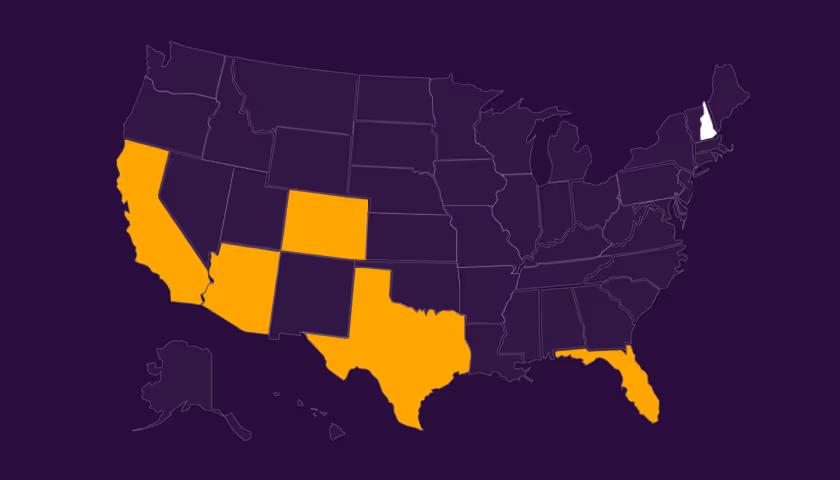
Estimate a long-distance move →Looking to ship your car to another state or across the country? Rivalane ships to all 50 states. Select a state to see how shipping to or from it works.
New Hampshire packs a lot into a small footprint. The Merrimack Valley cities run in a line up I-93 from Salem to Concord, the Seacoast towns cluster along the shortest ocean coastline of any coastal state, and the Connecticut River valley towns sit out west along the Vermont line. We collect from and deliver to all of them, and to the smaller towns in between.