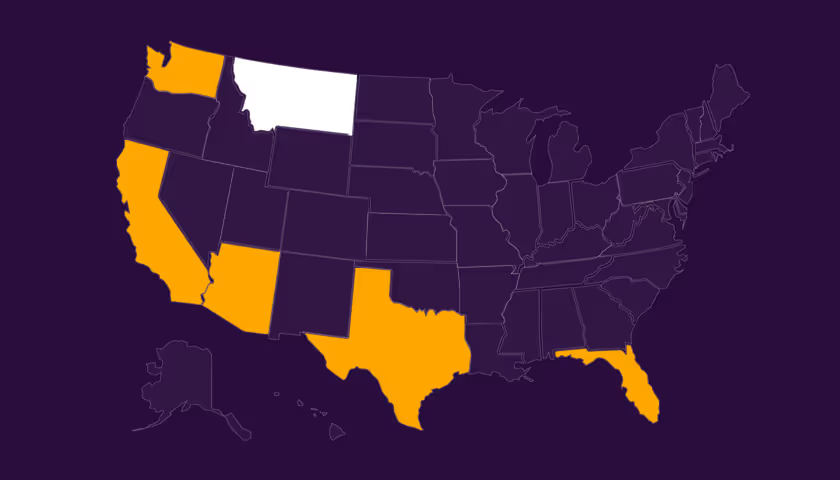
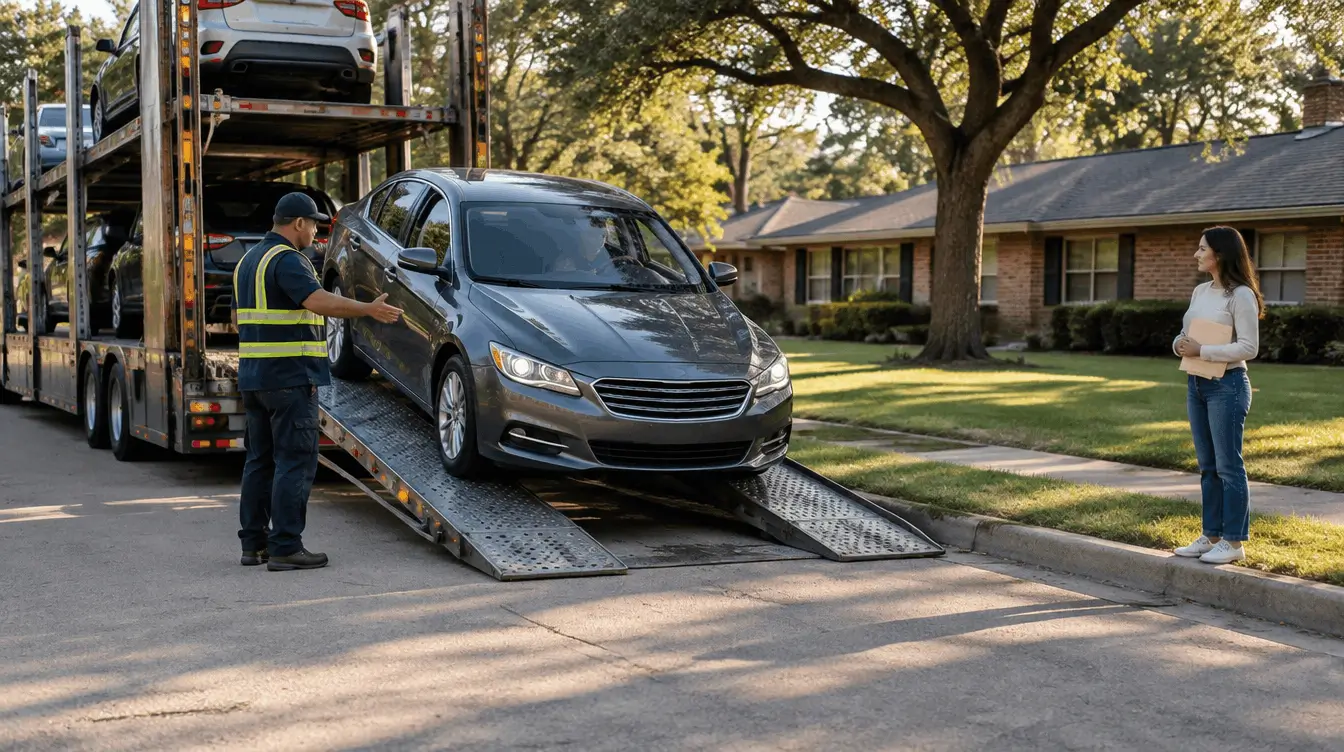
Rivalane arranges car shipping to and from every part of Montana, from Billings and Bozeman on I-90 to Kalispell, the Hi-Line and the eastern plains. Tell us the pickup and delivery addresses and we match the vehicle to a licensed, insured carrier already working that direction. The long southbound runs to Texas and Florida are the routes we are asked about most.




5-Star Average Rating
Fully Insured
Top Rated Service
Nationwide Coverage
Licensed and Vetted Carriers
Driving it yourself is the obvious alternative, and over Montana distances it is usually the expensive one. Billings to Dallas runs close to 1,300 miles, and Florida is well past 2,000. That is three or four days behind the wheel with fuel and lodging on top, and the mileage and the winter road treatment land on your own car rather than on a trailer. Add a mountain pass that closes with little notice and a self-drive plan stops being a plan at all. Putting the vehicle on a carrier turns the trip into one pickup and one delivery, and you fly instead. On a route this long the question is rarely whether shipping is worth it, it is how much wear and time you are willing to spend avoiding it.

Cost and timing on a Montana route depend on distance, trailer type, vehicle size, how reachable the pickup address is, and the time of year. The ranges below reflect typical market pricing and transit windows by distance, not a commitment on either. Your actual quote is based on real carrier availability on your specific route at the time of booking.
Distance sets the starting point, but where your address sits relative to the interstate matters just as much. I-90 carries steady through traffic between Seattle and the Midwest, and I-15 runs north to south, so a pickup in Billings, Bozeman, Butte or Missoula joins a route a carrier is already running. An address in the Flathead, along the Hi-Line, or out on the eastern plains asks a carrier to leave that circuit, and the quote reflects the detour rather than the mileage alone.
Trailer type is the next variable, since enclosed transport uses specialised space and there is less of it in circulation. Vehicle size and whether the car runs both change how it loads and how much deck it takes up. Season moves the number in both directions, because winter tightens availability while crews work the interstates first and some routes sit closed for the season, and the long southbound lanes fill up through autumn.
Lead time is the part you control. Booking one to two weeks ahead usually opens up more carrier options than a last-minute request, and on an off-corridor address it can decide whether you get a scheduled pickup or wait for the next truck heading that way.
Get your Montana quoteEvery Montana shipment runs the same five steps, from the first quote to the final inspection at delivery. Here is what happens at each one and what we need from you.





Tell us the pickup and delivery addresses, the vehicle, and the dates you can work with.
You get a quote built on that route rather than a distance estimate, with the factors behind it explained before you commit.

Choose the window that fits your schedule, and we match the vehicle to a carrier already working that direction.
On an address well off I-90 or I-15 we will tell you whether that window is realistic before you commit to it, not after.

Before the carrier arrives, take out personal belongings and have the keys ready. In winter, clear snow and ice off the vehicle so the condition check is accurate.
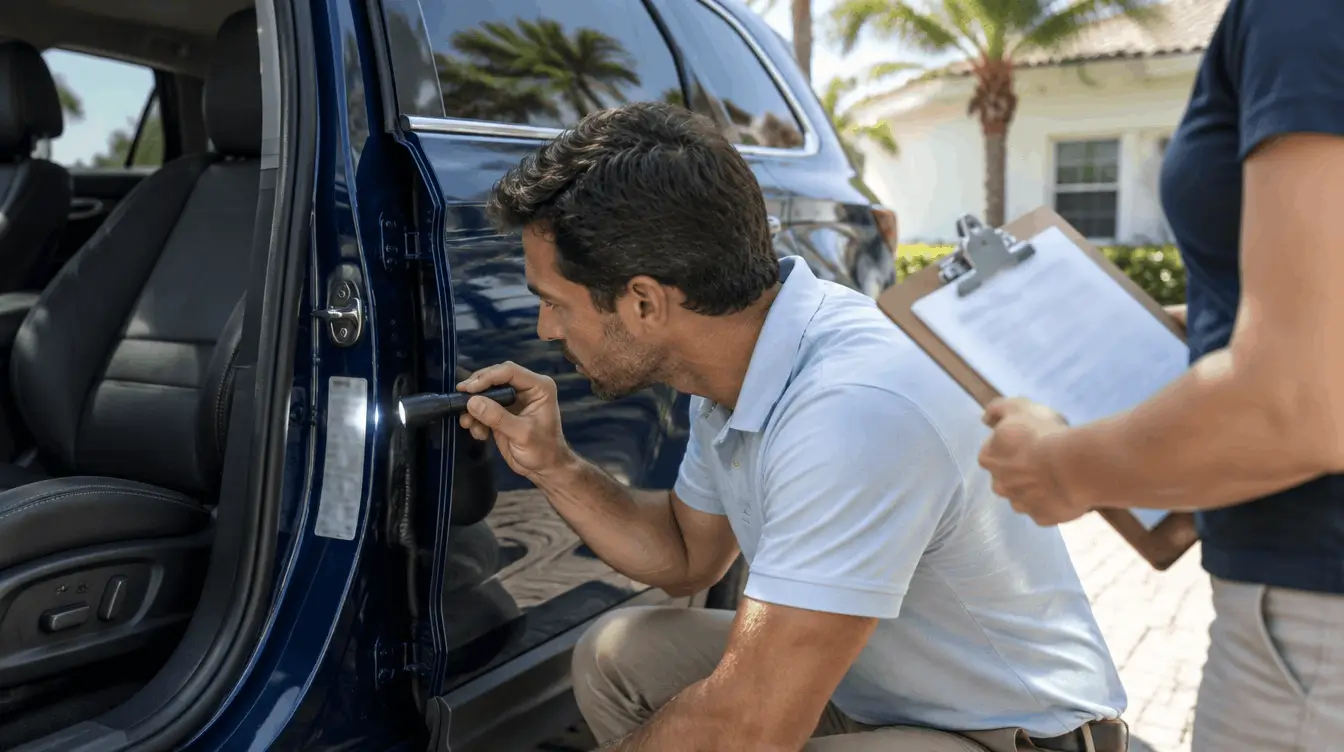
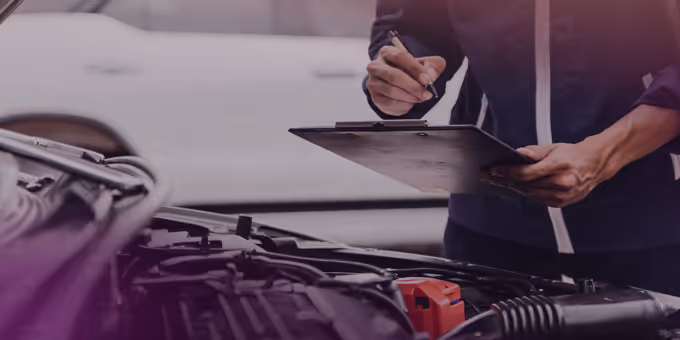
When the carrier gets there, they complete a quick condition check so everything is documented before loading.
As the vehicle moves, you get short updates on progress and expected timing.
If weather closes a pass or a storm slows the corridor, you hear it from us rather than finding out on the day.
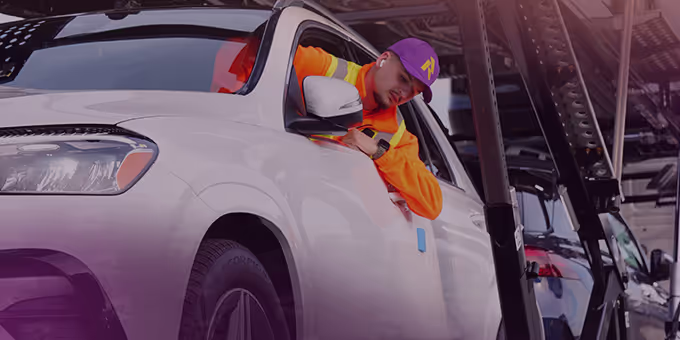
When the driver reaches your drop-off point, they complete a final walk-around with you.
You check the vehicle against the condition report from pickup, sign off, and the shipment is complete.
Every Montana shipment uses the same carrier network, but the right setup depends on the vehicle, the route, and where the pickup address sits. These are the options we arrange most often.
Texas, Florida, the East Coast and the Pacific Northwest are the routes we handle most often out of Montana. A long haul is planned around carriers already running that direction, so your pickup is built into an existing route rather than created from nothing.
Ideal for standard cars and SUVs. Your vehicle travels on a secure open trailer alongside others, which is how most cars move and the reason open car transport prices below enclosed on the same route.
For classic, high-value or specialty vehicles, enclosed car transport adds protection from weather, road debris and winter road treatment on the long routes out of Montana.
Your vehicle is collected from and delivered to the addresses you give us. Door to door transport means the carrier comes to you, and where a full size truck cannot safely reach a narrow street or a mountain driveway, we agree a nearby handoff point with you in advance.
We arrange pickups and deliveries across Montana, not only along I-90 and I-15. Kalispell, the Hi-Line, the eastern plains and the small towns between them are all covered, and an address well off the corridor is handled with a wider pickup window rather than turned away.
Every shipper claims to be reliable. Here is what actually separates a well-run move from a risky one, and what to ask before you book anyone for a Montana route.
Ask whether the company can name a real Montana constraint before you raise it, such as how they reach an address in the Flathead or out along the Hi-Line well off the interstate, or which mountain routes are closed for the season when you need the vehicle moved.
Ask whether the price you are quoted is based on your actual route and vehicle, or a generic distance estimate that gets revised once a carrier is assigned.
Ask what happens if no carrier is available on your exact date. That matters most between November and March, when a storm can shut a corridor and Montana clears its highest-volume roads first, leaving lower-volume routes waiting their turn. A shipper working from an existing carrier network can usually offer options faster than one starting from scratch.
Get your Montana quoteDemand into and out of Montana comes from a few clear directions. Here is who ships most often.
.svg)
A good share of the demand we see into Montana comes from buyers who bought a vehicle sight unseen somewhere else in the country. We arrange pickup from the seller or the dealership and deliver it to your Montana address, so nobody has to fly out and drive it back. One thing is worth sorting before the carrier collects. Make sure the seller can hand over a properly assigned title, because a title still sitting with a lender or an out-of-state dealer will stall the handover at your end no matter how fast the transport runs. It also helps to tell us the delivery address early, since a drop in Kalispell or east of Billings schedules differently from one sitting on I-90.
Estimate your shipment →.svg)
A vehicle you already own still has to be titled and registered once you get here, and a car that lands ahead of you is not a problem. One Montana rule is worth knowing: if the vehicle is eleven years old or more, you can register it permanently and skip renewals for as long as you own it. Most arrivals we handle head for Billings, Bozeman, Missoula and the Flathead. Addresses out along the Hi-Line or on the eastern plains are worth booking earlier, because carriers pass less often once you leave the interstate.
Vehicle transport services →
A vehicle that does not start needs a carrier with a winch and the right loading setup, and that is a smaller pool than standard open transport. It thins further away from the interstate, so a non-running pickup near Glasgow or Miles City needs more lead time than the same vehicle in Billings. Tell us the condition up front, including whether it rolls, steers and brakes, and we match it to a carrier equipped for it rather than discovering the problem at pickup. The same applies to a project car coming home from a workshop or a long-stored vehicle leaving a garage.
Quote a non-running vehicle →
Work, retirement and family moves take vehicles in and out of Montana in every direction, and the long southbound runs are the ones we are asked about most. Texas and Florida come up more than anything else, and demand on those lanes builds through autumn, so booking ahead of the season gives you more choice of pickup window. The Pacific Northwest and California move steadily too, because I-90 carries carriers in that direction year round. We arrange pickup from Billings, Bozeman, Butte, Missoula, Helena, Great Falls and the towns between them, then hand the vehicle to a carrier already working that direction. Tell us where it is going and we will build the pickup around it.
Estimate a long-distance move →Looking to ship your car to another state or across the country? Rivalane arranges transport to and from all 50 states. Select a state to see how shipping works on that route.
Montana's population sits in a handful of separated centres rather than one metro area. Billings, Bozeman, Missoula, Great Falls, Helena and Kalispell are each a couple of hours or more from the next, so a pickup that looks close on a map often is not. Find your city and ZIP code below, and give us the exact address rather than the nearest large town.