Rivalane arranges car shipping to and from Delaware with licensed, insured carriers and a choice of open or enclosed transport. Wilmington and Newark sit on I-95, so most Delaware moves join a truck already running the corridor between Philadelphia, Baltimore and New York.





5-Star Average Rating
Fully Insured
Top Rated Service
Nationwide Coverage
Licensed Carriers
Shipping a vehicle to or from Delaware is mostly a question of where the address sits relative to I-95. Rivalane matches your vehicle to a licensed, insured carrier already working that corridor, confirms the pickup window before anything is booked, and keeps you with one point of contact from quote to delivery. The driver inspects the vehicle at pickup and again at delivery, and the condition is recorded both times.


Cost and timing depend on your route, trailer type, vehicle size, and the time of year. The ranges below reflect typical market pricing and transit windows by distance, not a commitment on either. Your actual quote is based on real carrier availability on your specific route at the time of booking.
Delaware does not contain a large freight market of its own. It sits inside one. I-95 runs the length of New Castle County past Wilmington and Newark, carrying one of the heaviest freight flows in the country between Philadelphia 30 miles north and Baltimore 70 miles south, with Washington and New York both inside 130 miles. Trucks cross the state constantly on their way somewhere else. A pickup close to that corridor usually joins a load already running rather than sending a carrier out to collect a single car, and that is the main reason a Delaware shipment prices at the lower end of the national range.
Where you are in the state matters as much as how far the vehicle is going. Addresses in New Castle County, around Wilmington, Newark and Claymont, sit on the interstate itself and price near the low end. Kent and Sussex counties are reached off Route 1 and US 13 rather than off I-95, so Dover, Smyrna, Georgetown, Seaford and the Lewes and Rehoboth Beach area take a carrier away from the through lane to reach. Direction matters as well. Delaware takes in more vehicles than it sends back out, so trucks that arrive loaded often leave with space, and the same pair of cities can quote differently depending on which end you start from.
Vehicle size, whether the car runs, and trailer type all move the number, and enclosed transport runs roughly forty-five percent above open because fewer vehicles fit on the trailer. The factor most within your control is lead time. Booking a week or two ahead puts your vehicle on a truck already running I-95 rather than one routed out to collect it, and that gap widens for addresses south of the Chesapeake and Delaware Canal and down into Sussex County.
Get your Delaware quoteMoving a vehicle to or from Delaware runs on the same five steps whether it is a short hop up I-95 or a cross-country lane. Here is what happens at each one, and what we need from you.





Share your pickup and delivery ZIP codes for an instant estimate. Rates move with the route, the vehicle and the trailer you choose, so the figure is built on your actual lane rather than a flat state rate. Every shipment moves under the carrier's cargo insurance.

Pick a pickup window that suits you. Once it is confirmed we match the vehicle to a licensed, insured carrier already working that lane, and send you the booking details, including who is collecting and when.

Remove personal items, leave the fuel low, and give the car a wash so the inspection photographs clearly. Tell us in advance about low clearance, aftermarket parts or a vehicle that does not start, because that changes which carrier can take it. The carrier records the condition before it goes on the trailer.

The carrier loads the vehicle and secures it for the route, working around low clearance or a non-running condition if you have flagged it. You get confirmation once the car is loaded, and the pickup inspection report travels with it.
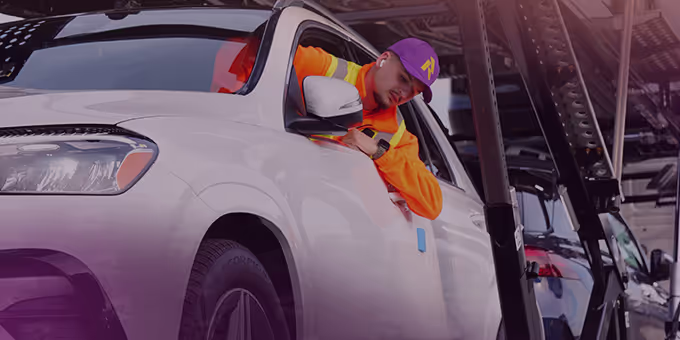
At delivery the vehicle is inspected again against the pickup report before you sign for it. Check it in daylight where you can, and note anything on the report before the carrier leaves, because that document is what any claim rests on.

Four transport options plus one specialty lane, all running on the same licensed, insured carrier network. Which one fits depends on the vehicle, the route, and how fixed your dates are. Estimate any of them with the cost calculator.
Pickup and delivery at the address you give us, whether that is a home in Wilmington, a workplace off Route 1 or a storage yard in Sussex County. Where a full-size transporter cannot safely reach the street, the carrier arranges a nearby meeting point instead. Door to door transport is the default on every Delaware booking.
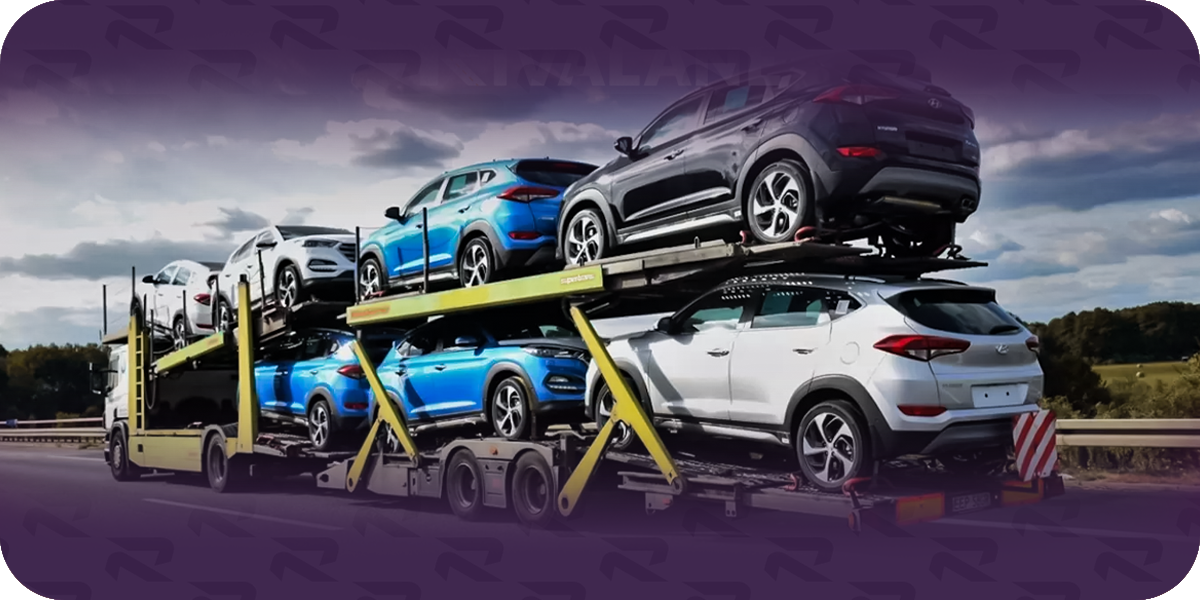
The standard choice for most vehicles and the lower cost option. Your car travels on an open trailer alongside others, the same way dealerships move new inventory, with the same insurance and the same inspection at both ends. Open auto transport suits anything that does not need shelter from the weather.
A covered trailer for classics, low clearance builds and vehicles where the paint matters. Fewer cars fit on the load, so enclosed auto transport costs more than open, and the table above shows roughly how much more on each distance band.
When the date is fixed rather than flexible, we search for carriers that can meet a tighter window. It costs more because it narrows the pool of trucks that fit, and availability on any given date depends on what is actually running your lane that week.
Not everything that goes on a trailer is a sedan. Motorcycles, low clearance builds, oversized vehicles and cars that do not start each need a carrier equipped for them and a different way of securing the load, so tell us what it is when you book rather than at pickup. Motorcycle transport runs on its own equipment and is quoted separately.
Every shipper claims to be reliable, and that claim is hard to test from the outside. Here is what actually separates a well-run Delaware move from a risky one, and what to ask before you book.
Ask whether the company can name a real Delaware constraint before you raise it, such as the DMV lane visit every out-of-state title has to go through, or how they reach an address down in Sussex County.
Ask whether the price you are quoted is based on your actual route and vehicle, or a generic distance estimate that gets revised once a carrier is assigned.
Ask what happens if no carrier is available on your exact date. A shipper working from an existing carrier network can usually offer options faster than one starting from scratch, and that gap is widest for pickups away from the I-95 corridor.
Get your Delaware quoteMore vehicles come into Delaware than leave it, and the demand arrives from a few clear directions, with the New York and Philadelphia corridor the largest by some distance. Here is who ships, and what each one needs to have ready.
.svg)
Many Delaware buyers purchase sight unseen from another state. We arrange pickup from the seller or the dealership and deliver to your Delaware address, so nobody has to fly out and drive it back. Delaware will not issue a title until the vehicle itself has been presented at a DMV inspection lane. A car you have never seen has to pass that check before it can be titled, so ask the seller about tires, brakes, glass, wipers and the exhaust before you buy rather than after. Ask for proof of any sales or transfer tax already paid as well, and keep it with the title.
Estimate your shipment →.svg)
A car you already own is worth timing rather than leaving to chance. The document fee is the part worth planning around. Delaware credits it against sales or transfer tax you already paid in the state you left, so a delivery date that slips can move you outside the qualifying window and turn a waived fee into a real one. Tell us your arrival dates when you book and we will plan the drop-off around them.
Vehicle transport services →
A vehicle that does not start needs a carrier with a winch and the right loading setup, and that is a smaller pool than standard open transport. Tell us the condition up front, including whether it rolls, steers and brakes, and we match it to a carrier equipped for it rather than discovering the problem at pickup. The same applies to a project car coming home from a workshop or a long-stored vehicle leaving a garage.
Quote a non-running vehicle →
Work and family moves take vehicles in and out of Delaware, and the corridor does most of the work. I-95 runs north through Wilmington toward Philadelphia, New Jersey and New York, and south toward Baltimore and Washington. The northbound run toward New York is the busiest lane touching the state. Route 1 and US 13 carry the traffic south through Kent and Sussex counties, and the Delaware Memorial Bridge ties the state into the New Jersey Turnpike for anything heading further northeast. We arrange pickup across Wilmington, Newark, Dover, Middletown and the Sussex beach towns, then hand the vehicle to a carrier already working that direction. On a long lane the date matters more than it does on a regional hop, because fewer trucks run any given route in a given week.
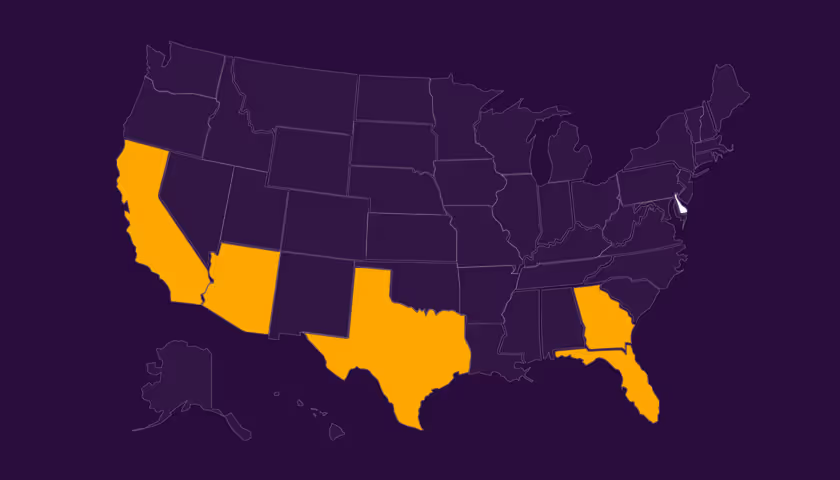
Estimate a long-distance move →Planning to ship your car to another state or across the country? Rivalane arranges transport between Delaware and all 50 states. Pick a state to see how that lane runs and what the state asks of your vehicle once it arrives.
Delaware has three counties, fewer than any other state, and runs about 96 miles from the Pennsylvania line in the north down to the Maryland line at its southern tip. Every address below sits within a short run of either I-95 or the Route 1 spine, which is why pickup windows across the state tend to sit closer together than they would in a larger state. The list covers the cities and ZIP codes we are asked for most often, and if yours is not on it the address is still within reach.