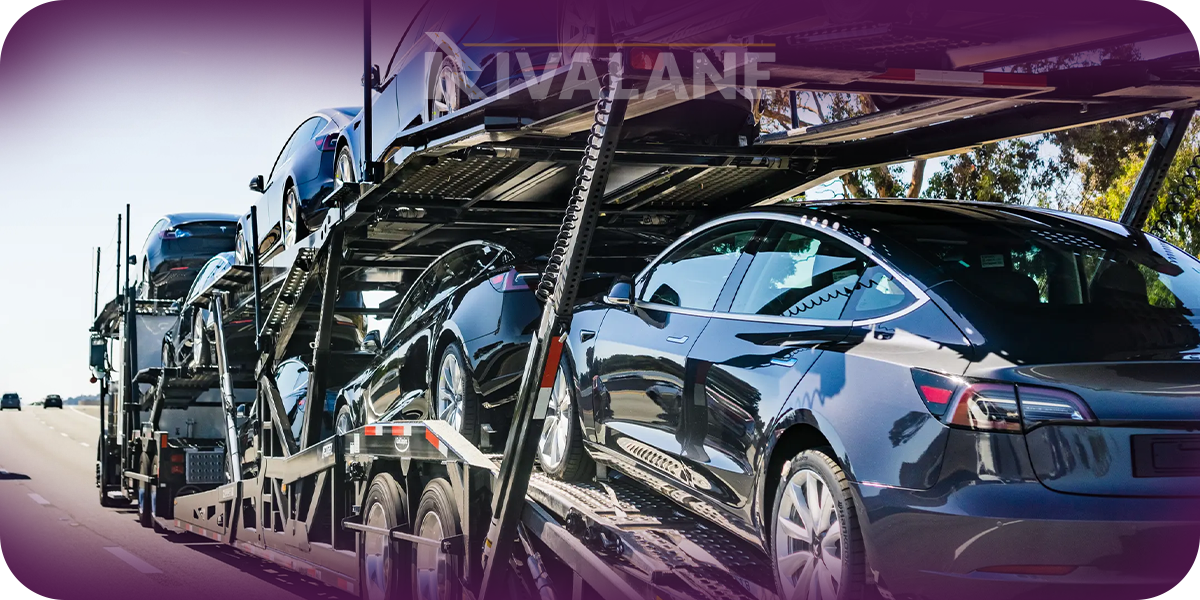
No road reaches Hawaii, so every vehicle crosses by sea. Rivalane moves your car overland to the mainland departure port, where the shipping line takes over for the ocean crossing, so you know from the start who is handling which part. Tell us the pickup address and the island it is heading for, and we will plan the road leg around the sailing.



5-Star Average Rating
Fully Insured
Top Rated Service
Nationwide Coverage
Licensed, Vetted Carriers
On a mainland move the delivery date is the whole job. On a Hawaii move the road leg has to land inside a window someone else sets, because the terminal will not accept a vehicle far ahead of its sailing and will not hold it once the cutoff passes. Rivalane plans the pickup backwards from that window, keeps one point of contact on the road leg, and tells you what the terminal expects before the carrier arrives.


A Hawaii move runs in five steps across three parties. Here is the order things happen in:
Give us the pickup address and the port your vehicle sails from, and you get a price for the road leg. That is the part Rivalane carries. Ocean freight is quoted separately by the shipping line, so ask for both numbers before you settle on a budget.

Book space with one of the ocean carriers running the lane from the West Coast. Departures run to a fixed schedule, so the sailing date sets the timing for everything else rather than the other way round. Confirm which island the booking terminates at before you fix anything else.

Clean the car inside and out, take dated photos, and remove every personal item, since carriers refuse vehicles with belongings inside. Keep the fuel low. Have your title, registration and any lienholder authorisation in hand, and confirm the shipping line accepts your vehicle type before the truck is booked.

A carrier matched to your route collects the vehicle and runs it to the terminal, documenting its condition at pickup. Rivalane's part of the move ends at the terminal gate, where the shipping line takes over and issues the bill of lading.

The vessel carries the car to its island terminal, and the port releases it against the bill of lading once it lands. The safety inspection, the use tax and registration with your county all come after that, and the bill of lading forms part of the file you hand over.

Rivalane handles the overland side of a Hawaii move, from any mainland address to the port and back again. Here is what that covers and what the shipping line decides instead of us.
We collect from any address on the mainland and run the vehicle overland to the port your sailing leaves from, including origins far inland where the road leg is the longer half of the journey.
Your vehicle travels on an open trailer for the run to the port. It is the usual choice and the lower cost one. How the car is stowed at sea is the shipping line's decision rather than a trailer type you pick.
An enclosed trailer shields the vehicle from weather and road debris on the way to the port, which suits classics, low clearance builds and high value cars. It costs more than open, and like open it covers the road leg only.
Shipping lines set their own acceptance rules and those rules change. Electric and plug in hybrid vehicles are currently refused by at least one carrier on this route, and a vehicle can also be turned away for cracked glass, for not running, or for personal items left inside. Confirm eligibility before the road leg is booked, because a car refused at the terminal has already made the trip.
Not every shipping line on this route carries motorcycles, and vehicles over standard height or width are handled separately from cars. Tell us what you are moving before the road leg is planned, since the vehicle itself decides which sailings are open to you.
Getting a car to Hawaii means at least two companies carry it and two government offices are waiting when it lands. Most of what goes wrong happens in the gaps between them. Here is what to check before you book anyone, and what a well run company raises before you have to ask.
Ask which company is carrying the car on each leg, and what each one's liability limit is on its own leg.
Ask whether the number you are quoted covers the inland transport only, the ocean freight as well, or the use tax that follows once the car lands.
Ask how your island is served and what the cutoff is, since sailings run on a fixed schedule rather than on demand.
Get a quote to the departure portLooking to ship your car to another state or across the country? Rivalane moves vehicles overland in all 50 states. Choose a state to see what shipping to and from it involves.
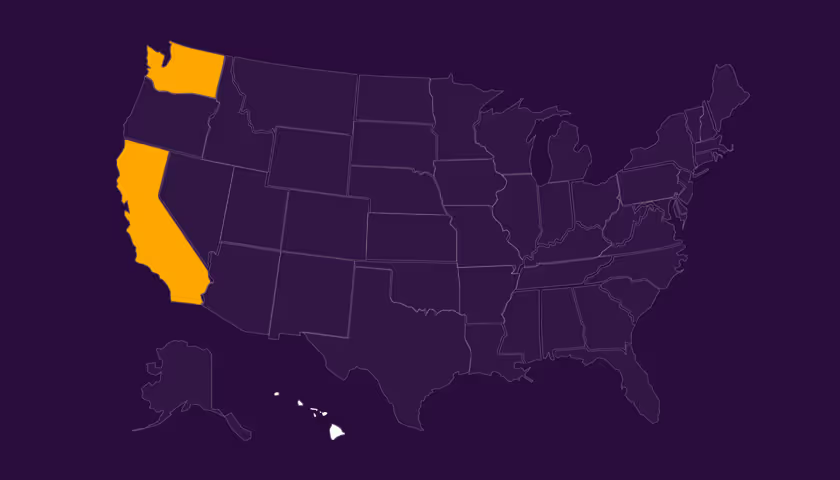
Hawaii's vehicle terminals sit across five islands, so the ZIP areas below group around ports rather than around cities. Honolulu on Oahu takes the largest share of arrivals, with Kahului on Maui, Nawiliwili on Kauai and Hilo on the Big Island handling the rest, and smaller volumes reaching Molokai and Lanai. Which terminal your booking ends at shapes how the vehicle reaches you once it lands, and Rivalane's own work sits on the mainland side of that journey.
96706, 96797, 96818, 96789, 96744, 96734, 96816, 96819, 96817, 96792, 96707, 96822, 96786, 96701, 96782, 96825, 96826, 96815, 96813, 96814, 96835, 96821, 96842, 96795, 96762, 96712, 96791, 96717, 96731, 96863, 96857, 96759, 96860, 96730, 96853, 96859, 96827, 96820, 96858, 96861, 96709, 96802, 96801, 96804, 96803, 96806, 96805, 96808, 96807, 96810, 96809, 96812, 96811, 96824, 96823, 96828, 96830, 96837, 96836, 96839, 96838, 96841, 96840, 96843, 96846, 96844, 96848, 96847, 96850, 96849, 96854, 96898
96793, 96753, 96732, 96761, 96768, 96790, 96708, 96748, 96763, 96779, 96770, 96729, 96713, 96757, 96733, 96767, 96784, 96788
96746, 96766, 96741, 96756, 96754, 96796, 96752, 96722, 96705, 96716, 96703, 96714, 96747, 96769, 96751, 96715, 96765
96729, 96742, 96748, 96757, 96770
96720, 96721
96763

Three separate charges make up a Hawaii move: the overland run to the mainland port, the ocean freight, and the use tax Hawaii charges once the car lands. Rivalane prices the road leg. The shipping line quotes the ocean crossing separately, and the tax is worked out after arrival. Ask which of the three any number covers before you compare quotes, because a figure that looks low often covers only one of them.
Timing depends on where the vehicle starts, which sailing it is booked on, and which island it is going to. Vehicles bound for Oahu arrive directly. Anything heading to Maui, Kauai, Molokai, Lanai or the Big Island moves through Honolulu first and then onto a connecting service that runs far less often than the ocean sailings, which can add weeks rather than days. Sailings run to a fixed schedule, so missing a cutoff means waiting for the next departure.
No. Rivalane arranges the overland transport between your address and the mainland port, and our part of the move ends at the terminal gate. The ocean crossing is carried by the shipping line you book with, under its own terms and its own liability limits. Working out where one company's responsibility ends and the next begins is the most useful thing you can do before booking anything.
The shipping lines sell port to port and door to port service. Port to port means you deliver the vehicle to the mainland terminal and collect it at the island terminal yourself. Door to port adds collection from your address on the mainland, and that road leg is the part Rivalane arranges. Open and enclosed trailers describe the road leg only, since how a vehicle is stowed aboard the vessel is the shipping line's decision rather than something you select.
Not always. Shipping lines set their own acceptance rules and those rules change. Electric and plug in hybrid vehicles are currently refused by at least one carrier on this route. Vehicles can also be turned away for cracked glass, for not running, or for personal items left inside, and motorcycles and oversize vehicles are handled separately from cars. Confirm eligibility with the shipping line before the road leg is booked, because a vehicle refused at the terminal has already made the trip.
The vehicle needs to be clean inside and out and completely empty, with the fuel level kept low. Have the title, current registration and photo identification to hand, plus a letter of authorisation from the lienholder if there is a loan on the vehicle. Take dated photographs before handover, since the condition recorded at pickup is what any later claim rests on.
The port releases the vehicle against the bill of lading. After that, a Hawaii safety inspection has to be completed before the vehicle can be registered, and the vehicle has to be physically present for it. Registration runs through the county you live in rather than a statewide motor vehicle office, and the shipping paperwork forms part of that file, including a bill of lading showing the arrival date.
Hawaii charges use tax on a vehicle imported into the state, and the Department of Taxation calculates it on the vehicle's landed value. Landed value includes the freight you paid to get it there, so the shipping cost sits inside the taxable amount. The counties also ask for Form G-27, the Motor Vehicle Use Tax Certification, stamped by the Department of Taxation, for vehicles of the current, previous or subsequent model year bought out of state. Exemptions apply in some cases, so check your own position with the Department of Taxation. Rivalane does not handle tax or registration.
Hawaii requires proof of ownership before a vehicle may be removed from the state, so the title or registration has to be in order before you book. Every compartment is inspected for soil, seeds and plant material, which means the car has to be clean inside and out before it sails. Once it lands on the mainland, Rivalane can collect it at the arrival port and deliver it to the address you give us.
The shipping lines set their own military pricing, so ask the carrier directly when you book the ocean leg. Separately, an active duty member stationed in Hawaii who is not a Hawaii resident and has already paid sales or use tax to their home state is not required to file the state's motor vehicle use tax certification. That exemption turns on both conditions together, so a service member who has become a Hawaii resident, or who paid no tax in their home state, is treated like any other importer.